Ali Ghaemi

Oct 052007
 

Showware – Showing Them Your Soft Wares

demonstrating

Demonstrating To Win is an exhaustive book on the topic of demonstrating software by experienced hand Robert Riefstahl. The author delves into the subject at hand with precision and detail through chapters like Demonstrating Is Not An Art!, Important Demonstration Concepts, The Demo Crime Files! and Your Demonstration Setting. There can hardly be a better resource than Demonstrating To Win for professionals in the industry. The book covers the obvious, mundane and elementary to the detailed nuances and tricks of the trade and aims to articulate the author’s main thrust that in order to win the day the presenter has to build a bridge that the prospect wants to cross in order to reach you (and your software product).
Each chapter is augmented by a brief summary which offers a synopsis of the topic covered and the author practices what he preaches by offering his experience in plain language. There certainly are a couple of instances where the reader will notice the book’s age and its year 2000 publication date, most notably during the technical discussions, but Riefstahl’s guide is comprehensive and advantageous all the way through and still relevant to those demonstrating software to potential customers.

Sep 012007
 

Do Not Leave The Sword Behind On The Next Sales Call

samurai

Here is a book on sales technique with a different angle. Samurai Selling: The Ancient Art Of Modern Service by Chuck Laughlin, Karen Sage and Marc Bockmon takes lessons learnt from the famed and legendary shogun and the nameless or ordinary samurai of Japan and applies them to the arena of modern selling. The authors are armed with metaphors, quotations, excerpts and parables of the samurai and use them to create analogies between the two worlds. Samurai, the authors tell, translates roughly to ‘one who serves’ and the writers seek to instill the value, along with other concepts like Ki, balance, integrity, urgency and APE (Account, Problem and Effect) questioning into the reader.
The concept is different and interesting, but the book has as many hits as misses. For one, the authors’ analogies are often stretched and forced. For another, the book seems to run out of applicable parables on occasion and just does without. Moreover, to maintain perspective, the samurai sought to serve without looking for gain. The modern salesperson – and his manager – would hardly care for that attitude. Yes, serving brings and facilitates the sale, but the juxtaposition still has merit.
Samurai Selling is a lofty ideal – the authors’ use of it to launch, nurture and enrich a corporate training career notwithstanding – but looking around one sees plenty of real-life examples which contradict its application to success.

Jul 152007
 

A Succinct And Easy-To-Read Book On The Basics

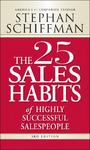
25habits

The 25 Sales Habits of Highly Successful Salespeople is a concise book on how successful salespeople go about their profession. The 25 ‘habits’ are quite basic and hardly represent a revelation to anyone but the most novice of salespersons.
Nevertheless, the 130-odd pages can be a fast and quick review, or check list if you wish, for anyone interested in covering the basics.
The book’s title might or might not be referring to Steven Covey’s famous series. Either way, The 25 Sales Habits can apply to more than just salespeople.
Pro: A quick read with a quick reference summary at the end.
Con: Too basic for most and a partially dated entry in the ocean of sales collateral designed to launch a training career.

Jun 202007
 

A practical approach to workplace situations

managing

Managing Multiple Bosses: How to Juggle Priorities, Personalities & Projects, and Make It Look Easy is a book with an atypical approach to solving common workplace issues. Written by author and speaker Pat Nickerson, the book is in fact a compilation of issues, discussions and solutions offered at different seminars by disparate participants. In this way, the book takes advantage of a rare common wisdom and set of experiences. Moreover, The overall subject-matter is more true to the book’s sub-title as opposed to its main title. Managing Multiple Bosses… has a broader focus than just managing multiple superiors. It indeed discusses and offers practical solutions for other aspects of the corporate circus. In this context, the book has a lot to offer and is even fun to read at times – the serious nature of the issues discussed aside.
The sole fault with the book though is its organization. Titles, sections and problems/solutions do not enjoy an elegant and logical pattern or organization. Rather, the book is somehow organized as one discussion after the other and the bold headings are of little consequence.
All in all, Pat Nickerson’s compilation is an above average read for corporate citizens.

May 202007
 

Marketing, in recent years, has morphed into a jumbled exercise of costly practices with next to no identifiable result or return on investment. Marketing departments spend lavish amounts on ‘analysts’ and far-flung exhibits and seminars during which untargeted masses float by uninteresting vendors. Gaining new customers should be a more targeted exercise. Step one, find out who your current ones are and keep them.

More customers should mean better profit, better income and job security. That much is obvious, but do you have a method to identify them? It all starts with information.

Gather and go over data for the past two years on all your sales. A longer record may be needed for higher dollar value sales that would limit the quantity of transactions, while a shorter time span might be considered for smaller ticket sales.
Identify the customers’ industry or vertical and map it to their NAICS* (which is replacing SIC), employee count, location/geography, revenue or even their age and gender if appropriate and available. Note all commonalities. Use a public or paid private database to find more customers of similar demographics. http://www.accoona.com is one example. Company websites and government records will also help.

If using software then do not forget to leave space (in CRM, spreadsheets, PIM, etc.) for notes about their particular likes and dislikes and significant milestones so you can input the information into your a calendar for reference. This idea is more valid the bigger the transaction size. Use your reminders to dispatch a call or a card. This is the customer retention side of your effort.

Always ask for referrals from your current customers. They typically know their industry and have contacts therein.

Focus your efforts and pursue business where you have been successful in the past. This approach also allows you to conduct reference selling. It is less difficult and more fruitful to do targeted work than casting a wide and expensive net. Make your existing company data work for you. Never mind the expensive booth, at the expensive conference that modern marketing types prefer. You know better if you are on a budget.

*NAICS is used by business and government to classify and measure economic activity in Canada, Mexico and United States.

Mar 282007
 

It is not a secret that many managers find assisting, supervising or directing their employees a frustrating task. Given the prevalence of management books, courses, articles and the evolving nature of human relationships the effort apparently is not becoming any easier. Yet, there have been numerous studies and surveys in recent years basically telling us what it is that motivates employees. The answers are not surprising. They confirm what we have already suspected.

Employees are not motivated by fuzzy intangibles. Motivational gurus conducting training or vague promises of the future do not motivate employees. Here is what polls and surveys tell us actually makes employees happy, ego productive, ergo valuable:

Number 1: Money – Saving money by underpaying salaries is not only stupid, but also counterproductive to the business. Employees who do not get paid well lose their motivation, productivity and help you to consequently lose staff. If paying fair wages is impossible, then managers, department heads and business owners need to think out of the box. We are talking about work flexibility, time for personal projects or extra vacation time.

Number 2: Respected – This one is in many ways the easiest to achieve, although one has to bear in mind that different people have different needs and react differently to different things. Managers need to figure out to what individual (not the department or the company) employees respond and personalize the way they tell respective employees they are appreciated. If a public shower of confetti is not be the way to go, then it might be time to ask the employee what he or she would like to see and hear. Hey, perhaps the employee would like paid time off to attend a special course or training. This is possibly the ultimate win-win.
Hint: Show appreciation; do not feed egos and alienate people with random acts of silliness like the granting of a vanity parking space. Centre in on how to make a personal connection with your team.

Number 3: Promotion – many managers preach this, but do not act upon the mantra. Apparently, management often finds that the grass (talent) is greener (smarter) outside one’s own company. Managers need to ask themselves whether it is really intelligent to hire someone from outside into a top position and create resentment at the same time? Are the skills truly not available in-house especially if the newly subordinated have to train the new person? An outside hiring is often justified based on new developments, geographical limitations and unforeseen business imperatives, but there are few reasons why an outside hiring is called for outside those areas.

Number 4: Health – This surprisingly is rated fourth, perhaps because employees are people and people take it for granted. Healthy and happy people are more productive and more liable to contribute positively to the work place. Managers need to help their staff catch up on sleep, exercise, have fun and remain healthy. Hot-dog Fridays? So 1979. Fruit-bowl Afternoons? Now we are talking.

Number 5 – Information – Managers need to think proactively about connecting their teams with the company by keeping them informed and being honest. Employees cite being informed and in-the-know as one factor in terms of their happiness and identifying with their managers. Let everyone (even the quiet guy in the corner) know where he or she stands, what is expected of him or her and how he or she can attain even more. Nip rumours in the bud. Then ask them how this measures against their perception of themselves, you and the company and ask them to compare it to their vision and plans. Furthermore, managers can delight their staff by genuinely asking for employee input, but only if there is a plan for implementing much of it. Otherwise, the lack of follow-up will give rise to cynicism. Talk about backfiring!
Information, of course, is need to keep employees abreast of their positions and assure them that they are being treated fairly and objectively.

It is essential that managers listen to what their employees say brings them happiness. It is also vital that the above be considered and acted upon proactively. It is easier to keep staff happy than restore the outlook of dejected individuals. That is why managers should zoom in on why employees stay with a company, rather than why they leave.

*Things That Need To Go Away: Hawaiian shirt/casual/jeans days

Mar 272007
 

Every salesperson knows that leads are useful and a pre-requisite to a transaction and sale. Leads are simultaneously abhorred, however, because many recognize them as potentially time wasted or unfruitful. Others dislike the responsibility and subsequent scrutiny that a sales lead entails.

Sales leads should be treated as a process. They can always get better and they need continuous work, but each of them must be treated with care in the meanwhile. There is no question that among the leads one receives many will remain non-responsive, but inevitably a portion of one’s sales leads do end up becoming customers. Even if 20% of leads become actual sales opportunities – incidentally a realistic proportion – that number still is 20% more than zero or, in other words, 20% more than the number of potential sales had one not called the prospect… and called and called again!

Therein lies much of the problem. Customers consistently have real plans and equally real budgets to spend, yet this does not automatically translate to calls being returned. Be it plain rudeness, a lack of common courtesy, customers’ settling for the least busy solution/vendor or the busy nature of people’s lives salespersons and the lead generation teams hardly ever hear back from prospects – even those who need to return calls.

Therefore, the shrewd salesperson will keep on calling until he reaches the prospect in person. It simply is worth the effort. The less tenacious salespersons will lose out.

* Those who reach the customer will be in the running for the business – so keep trying.
* Despite the horror stories rampant in sales circles about ‘tire kickers’ (and similar descriptions) most prospects will actually and eventually buy. Unfortunately, it is easier to remember those prospects that did not buy in the past because they became irritations.
Use the tools at your disposal. Put the lead generation team, your CRM, your contact manager or note pad to use and be persistent.. Just do not abandon the lead.
* Should a prospect be unavailable and non-communicative or be in the market only much later find out if your company can assign a lead generation or marketing representative in charge of keeping these opportunities ‘warm.’ This will free you to concentrate on the more imminent sales. Alternatively, for bigger organizations, there might be a division of duties in order between the inside and outside sales groups.

The prospect that becomes a sale might be only one telephone call away. Can one afford not to call?
The customer who will only consider buying next year might be the difference between achieving and not achieving quota next year. Can one afford to be dismissive of the opportunity?

Things That Need To Go Away: Abandoning a customer that you know needs you solution.

Mar 162007
 

-Please speak about your background and qualifications. What makes you credible on the topic of presentations, sales and marketing?

I have been speaking professionally for almost eight years and did training and presentations as part of my corporate job before that. I became an expert in the strategic use of presentation visuals by studying what works, figuring out why it works with audiences, and then explaining how presenters can use these techniques to develop their own slides. Because of this depth of knowledge, Prentice Hall asked me to co-author an MBA text on the topic, which was published in 2006.
Naturally, a lot of presentations are done in the sales and marketing area, so a fair amount of my consulting and training is for organizations that are responsible for sales in a larger company.

-What is the background of your website and what do you feel it adds to its visitors?

I was fortunate to learn early on from some experts what makes an effective web site, so my goal on the web has always been to offer value to those who visit the web site. I have many free articles posted and every issue of my newsletter (over 130 issues so far) is also available on my web site. Whenever anyone signs up for my newsletter (which is also free), they start with a 7-day e-course on proper PowerPoint usage so that they can see if my ideas are right for them. My web site and newsletter have been effective because I can trace most of my clients back to something I wrote for the web site or in a newsletter.

Spotlight On The Presenter

Spotlight On The Presenter

-At a high level when is a presentation is necessary and when it is forced into the process?

In my opinion, a presentation should be chosen as the method of communication when the message needs to get to a number of people at the same time and you will want discussion during or after the presentation. Too many times a presentation is used when an e-mailed report would be better. If there is no discussion necessary, you should use a report instead of taking people’s time to attend a presentation. In any business situation, professionals need to think of not only what their message is, but what method should be used to deliver it.

-What is the single biggest mistake people make when presenting?

In my survey of audience members on what annoys them the most about bad presentations, the overwhelming number one issue is when the presenter stands there and reads the slides to the audience. This is annoying because audience members can read four times faster than the presenter can speak and the presenter is not adding anything new. It is really a waste of time, and people today won’t stand for it. I always suggest a proper presentations structure, including audience analysis, goes a long way to developing an engaging presentation.

-To the best of your knowledge which is the best presentation in history?

There are many great presentations that have been delivered, and since I have not seen them all, it would be impossible for me to pick just one. What I suggest is that after you see a presentation that engaged you the entire time and motivated you to action, ask yourself what did the presenter do that was so effective? Was it a logical argument, was it effective visuals, was it the way they spoke or something else. By collecting your own observations and those of others, you will start to create your own list of what makes the ‘best’ presentation.

-Is PowerPoint the best tool for a presentation?

PowerPoint is one tool, and it may be effective in some presentations and not in others. It depends on what the audience expects, how they prefer to receive the presentation and whether visuals will add to the message or not. If PowerPoint will not add to your presentation, don’t use it. As to whether PowerPoint is better than its competitors, I really can’t say because I am not familiar with the other products. PowerPoint owns around 95% of the market, so that is where my clients want me to focus.

-There are no presentations on your website. Why are documents a better medium?

It is interesting that you make this observation. My web site is really a demonstration of my expertise, and I have found that people still use the written word to evaluate your level of expertise. I recently had some video recorded of me doing some live sessions and I hope to put selected clips on the web site in the near future so people can see some of what I do in a live session. I have also recorded some of my web training sessions, so people can always purchase one of those videos and learn a specific topic at their own pace.

-Dave Paradi can be found on the web. www.thinkoutsidetheslide.com

Mar 142007
 

It is often the case that companies believe that once a sale has been completed it is time to move on to the next customer. Yet, the truth is that the customer’s interaction with the company has probably just begun and hence the Customer Success department. Customer service professionals, post-sales managers or salesperson in charge of their own client relations know that their customers might (and probably will) at some point be less than pleased with the service they are receiving.

Whether the complaint is caused by a real or perceived deficiency or under-performance it is time to allow one’s superior customer service skills kick in. It is not only a matter of ethics and responsibility, for experience shows that gaining a new customer is more expensive than retaining a current one.

Propriety and business acumen? Follow these steps to speak to displeased clients:

*Listen and understand: you don’t know the issue without hearing it fully.

*Take notes: write the issues raised by the other party down for review and future reference. The notes will be better reflections of the situation than one’s memory.

*Ask questions: in order to fully understand the situation ask questions and do not rely on conjecture

*Repeat: go over the issue and paraphrase in order to make sure that you have understood the origin of the problem, the required next steps and your customer’s request.

*Acknowledge: let the client know that you have heard and understood them. Verbalize this.

*Facts not feelings: stick with factual information and avoid hysteria and ego. Use precise language and stick to the facts with an impartial tone of voice or body language.

*Inform: tell the person that you would like to help. Also acknowledge that you can hear the concern, sorrow or regret in their voice or can see it on their face.

*Coordinate: work with them within legal and legitimate means to remedy the situation. Outline this (again factually) and obtain buy-in

*Update: keep the person informed and be upfront if the issue will not be resolved right away. People are often reasonable if treated with deference.

The above steps are valid and should assist significantly if followed; yet the emphasis should be on taking the sensationalism and personality out of the picture. Do not take it personally if a customer is upset and take pride in rectifying the situation.

Things That Need To Go Away: taking it personally when it is not personal

Mar 132007
 

Quick, raise your hand if you look forward to customer objections.

Congratulations to those who did for, as seasoned professionals know, objections are a gir… salesperson’s best friend. It is natural of course to dislike, even abhor speed bumps and dread the inevitable objections that prospects raise – unless one is the president of a debating society – but before doing so out of habit pose a few questions to yourself.
Don’t you have objections before you make a purchase? Don’t you need reassurance before you part with your money? Do you ask for a better deal or even haggle? Doesn’t eager questioning imply you are getting closer to making a decision? Then why dislike the natural progression of the sales cycle?

Objection means interest, engagement and frankly a potential sale. A customer who is not raising the bar or posing questions is not likely to work with you.

The experienced professional expects objections and moreover looks forward to them.

-Be ready! Customer objections (for your industry or product) are probably not as varied as you may think. Be prepared for them, make notes of past objections you have heard and review them periodically.

-Do try to remove them proactively. Since we know that they are inevitably coming it is prudent to begin tackling them sooner rather than later. “Horatio, before we go any further, you have to agree with me that we will not be the lowest cost provider in the market. After all, you want to make sure that we remain healthy and viable business partners of yours for years, don’t you?”

-Reassure the customer that their objections are normal, been encountered by you before and that you appreciate their thoughtfulness. Furthermore, despite the objections having been raised before, the people bringing them up are now happy customers of yours.

-Ask exact questions to exactly understand the reason behind the objection. In order to answer the underlying question one needs to understand its extent and to whom they really belong.

-Agree and deflect. Some might liken it to verbal judo: “Horatio, I admit that we will not always be the fastest to deliver, but do you agree that you will not always need delivery 6:00 am the next day?”

The seasoned sales professional is gratified that customers have questions about products and services which they are considering and look forward to assisting customers with their decision.