Feb 182026
 

When OpenAI launched ChatGPT in November 2022, everything changed. ChatGPT turned the tech industry, and beyond, on its head. The power of Generative Pre-trained Transformers was suddenly democratized and the new ‘chatbot’ became talk of the town.

Since then, the product has found multiple providers and competitors, been the subject of endless debates, praise, blame and put to a myriad of tasks with uneven stories.

Many call Artificial Intelligence a job killer for youth, older workers who do not master the innovation or, per Microsoft’s research, a bane for the gamut of professions including workers in computer programming, mathematics or data science. I’d argue that the best assessment, either way, came from none other than Nvidia president and CEO Jensen Huang when he said, “You’re not going to lose your job to an AI, but you’re going to lose your job to someone who uses AI.”
Admittedly, his comment is self-serving, but few would argue that not changing or adapting is a recipe for success. Advanced economies have become what they are not because they have a smarter populace, better genes and a higher average intelligence quotient, but because they have deployed the levers of productivity and embraced automation to a higher degree than others to improve productivity and, by implication, their GDP.

While it is obvious that the correlation engine that is today’s LLM-driven AI is over-rated, and not everything is always as it seems, the fact remains that putting AI to work for yourself and your employer is a no-brainer.

Other posts have discussed the ethics, governance prerequisites and AI applicability across industries.

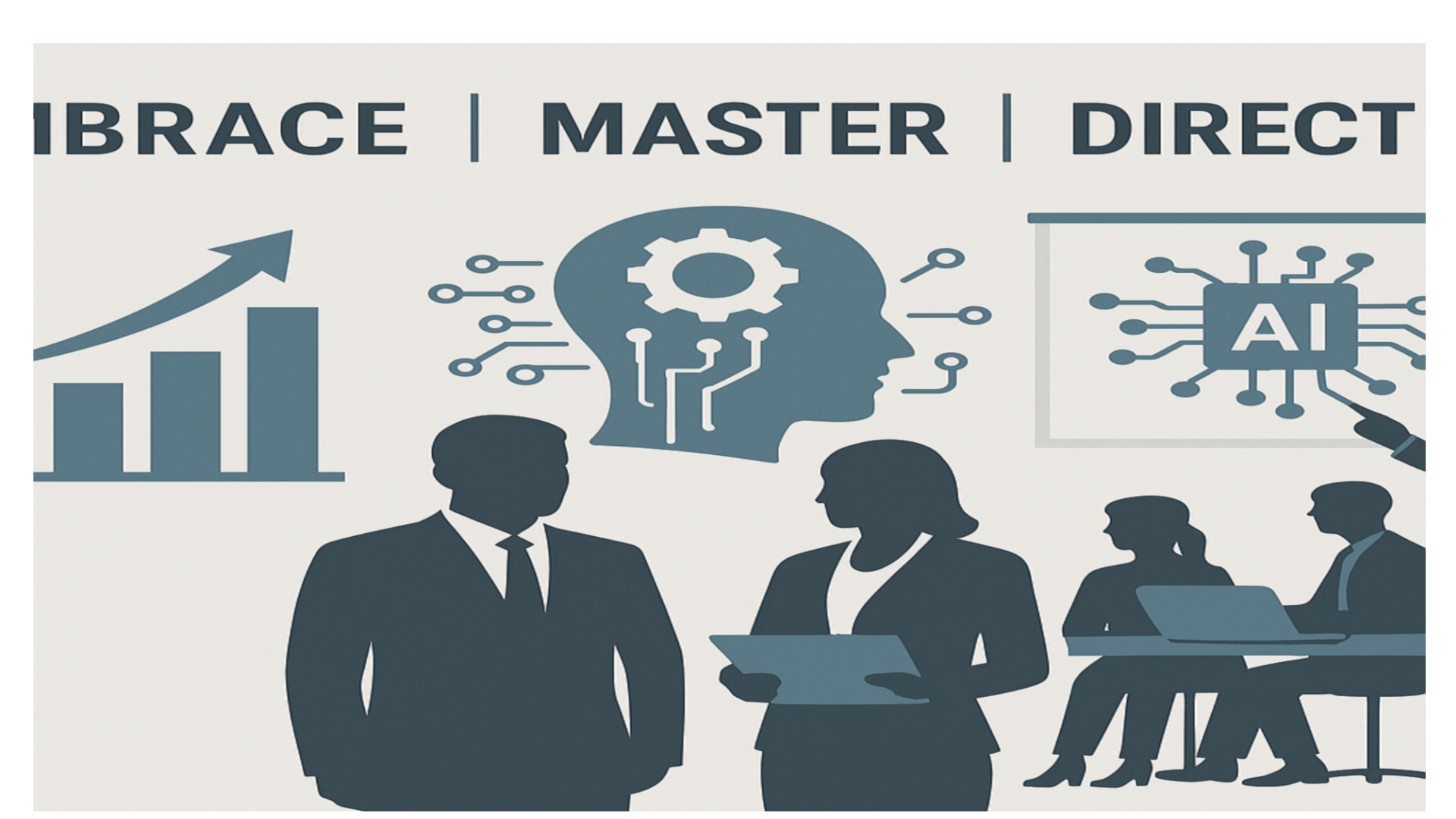
This infographic maps AI to the 8 core categories of marketing work, showing exactly where it applies and the specific tasks it powers.

Things That Need To Go Away: Siloed Marketing Functions And Marketers

Jan 312026
 
Dropped into Acumatica Summit 2026 mid-week to see what is emerging in the software and cloud ERP world and to hear what’s next in financials, productivity, operations and the back-office and front-end software world.

Coat Check Queue = Keeping Mine On

Convention Center Complete With A Misspelt Sign

2026 Evening Edition

The 2026 Summit was held in Seattle, Washington, USA.


I met with a few acquaintances, spoke with the Acumatica team and several ISVs, took a wellness break to receive a back massage via Chaz by Avalara from a licensed therapist before catching up with old friends Samuel and Igor.


Acumatica focuses on the midmarket and bills itself as a modern cloud ERP platform. Their theme (perhaps unofficially) was “Endless Possibilities.” A recurring phrase was “the digital replica of your business,” including software that understands your operations and mirrors data in real time. As you’d expect, AI was ubiquitous. CEO John Case emphasized that many AI‑driven capabilities previewed or promised last year are now arriving in the product this year.
Acumatica shared customer results claiming their platform helps companies ship up to 40% more product, reduce inventory by roughly 40%, and invoice in near real time. I attended sessions on AI, CRM, process manufacturing, inventory control and customers and supplier portals.
Presenters spoke about AI everywhere: embedded in workflows, reporting and decision‑support insights. Topics included industry depth, multi‑location inventory, regulatory‑compliant pharma tracking, coast‑to‑coast order visibility, DFR (daily field reports in construction) and batch processing.


Acumatica is leaning into solutions that are grounded in understanding the user. The vision for the software:


1. Future-proof
2. Adapts to the user and roles
3. Is industry-specific including addressing regulatory needs
4. Thinks about the user experience and
5. Is AI-first. Certainly, the user still comes first, but AI will be foremost and allows all employees to lead with technology. The unstated implication: employees increasingly cannot do their jobs without technology and they cannot truly lead others if they don’t understand the tools they are (maybe) asking teams to adopt. Think about that.


Speaking of which, as far as artificial intelligence, it was about “AI that works for you.” Acumatica has been incorporating, and enhancing, AI automation, AI advisor and its AI Studio, which is an assistant on the screen of your choice. Think of sellers getting cross-sell recommendations on eligible items. A salesperson might see an activity stream in CRM with suggested next steps, sales-order guidance for different roles, project managers in construction accessing the same contextual help. One example: a user asks the AI for the top five most profitable items in inventory. Then they can ask it to place a follow‑up order or pull up the details of any specific order. Moreover, as per the promise of AI, this is done through the use of natural language prompts. Acumatica emphasises much of it is zero-code. The AI Assistant is exactly that. It often replaces traditional reporting clicks and even a lot of mouse movement, which is more exciting in practice than it sounds on paper.
Acumatica also talked about using MCP (Model Context Protocol) to connect AI services with the broader application ecosystem. More AI Assistant capabilities are imminent in Acumatica R1 2026, whose beta was released to coincide with the Summit.
Acumatica’s team talked about moving from a “system of record” to a “system of intelligence.” What does that actually mean? The ambition is to move from simply creating and reading reports to a system you can speak with; one that can take action and drive more autonomous operations. That requires proactive data governance (garbage in, garbage out still applies) because we all know that AI can hallucinate. Data governance, lest we forget, is a continuous discipline, not a one‑and‑done project.


Things That Need To Go Away: Everyone Calling Their AI “CoPilot” (no, “Co-Pilot” doesn’t count). Thankfully, Acumatica is not doing that.
Jan 242026
 

There’s been some expert chatter over the last couple of years about how what everyone calls AI (artificial intelligence) today isn’t really. Rather, it’s an LLM (Large Language Model) that is essentially a correlation engine. In other words, instead of coming up with brilliant or novel ideas or practical suggestions, today’s AI gobbles data to spit out an answer that’s probably correct because the LLM has seen it enough times. Speaking of correlation engines, and as if AI wasn’t giving the masses enough, concern, Here comes a lawsuit against Eightfold AI’s job applicant screening systems claiming it discriminates and violates privacy laws of the United States. The suit seeks class certification (and participants).

My view is that it will fail because screening and ranking job seekers isn’t new. It’s mainstream. People ‘voluntarily’ share their information with LinkedIn (whose revenue relies on selling it. Been pestered to “verify” yourself recently?) and perhaps most importantly any existing laws regarding privacy or discrimination are currently barely being enforced. Two things: Firstly, Eightfold claims it does not scrape data from social media and secondly, I put quotation marks around ‘voluntarily’ because it isn’t exactly voluntary when it would practically exclude you from the job market.

Putting aside whether the suit attracts plaintiffs and gets certified or not, I’ve argued before, and still believe, that the barn door has already been left open and the horse has long since bolted. While valuing privacy and safeguarding your information remains important, the best approach remains to actively engage with AI to enhance productivity, gain knowledge and deepen our understanding of it so we can master it, or perhaps just grapple with it, effectively.

It is a constant fight to not become a commodity and, these days, an express path to commoditization is to not understand or use AI.

Back to the topic of Eightfold AI and the suit, Ontario’s new Working For Workers Four Act stipulates that employers with 25+ employees must disclose in public job postings whether AI is used for screening, assessing or selecting candidates. Left unsaid: how the government will supervise compliance. More pertinently, it leaves the door open to the machine processing of applications and the unfairness it purports to eliminate. After all, if there is anything wrong with the practice shouldn’t the government have banned the use of AI ranking instead of merely asking companies (my assessment: every company with 25+ employees) to simply state it? That would take regulating or banning AI (for this specific use case) and my cynicism tells me that is not in the cards. In essence, the government is saying: “Hey, it is wrong to do it, so make sure you tell people you are doing it!” Well, perhaps the government is saying not telling people is the only wrong. In effect, everyone will now add a sentence telling applicants they are doing what they always did and that everyone knew they are doing. In the meantime, AI will continue correlating you with success, hard work, being introverted or extroverted or not and more.

Real change would have been banning the practice and taking ghost jobs with it. Given how real action is not forthcoming, go ahead and master AI or it masters you by rendering you a mere data point.


Things That Need To Go Away: Change That Is Not Change


Jan 042026
 

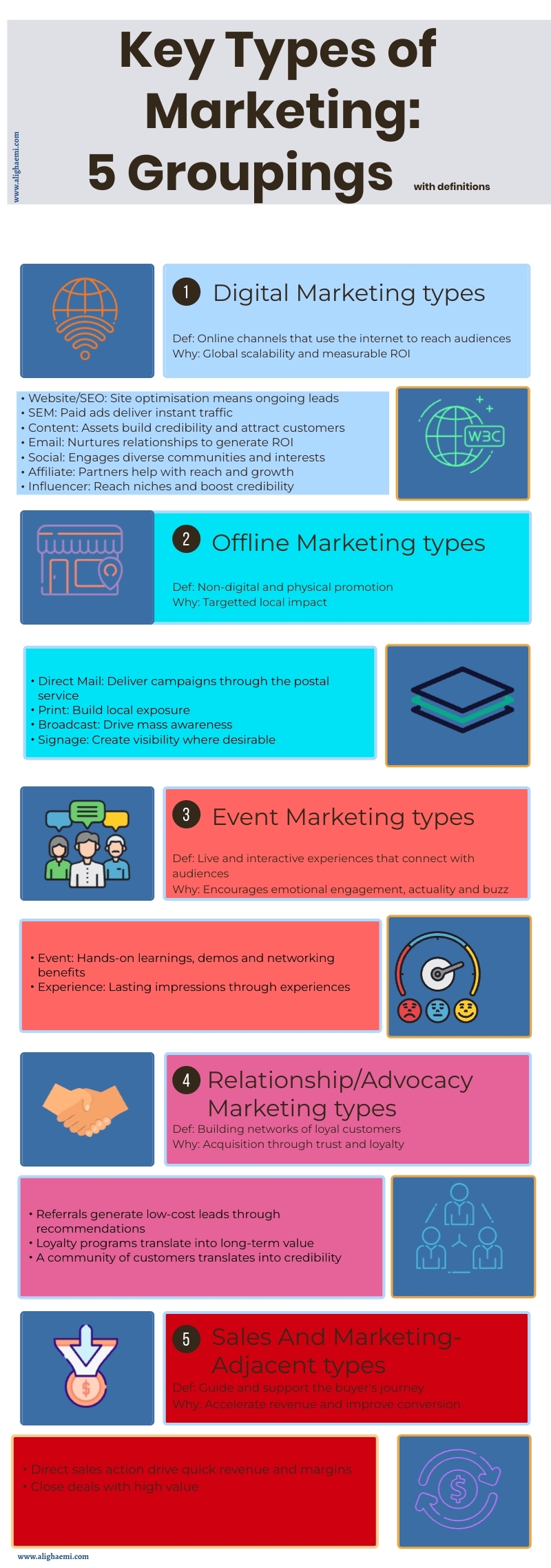
Marketing is the lever that connects with customers. Discover the 5 key types of marketing with their essential subtypes, definitions and why and how they drive results.

I put together this overview of key marketing types to show how today’s strategies connect across digital, traditional and relationship channels. Whether you’re scaling a brand or refining your next campaign, these five groupings capture the essentials. These five groupings also show how modern marketing connects strategy, creativity and customer experience. Understanding these categories helps marketers and leaders align efforts to both short-term growth and long-term brand value.


Marketers must show customers what they truly are in everything they do: what they sell, how they sell it, how much they sell it for, how they structure the business to make a positive contribution to them, as well as the language and approach they use to express all that.
The marketing industry has so many levers to pull. It is not only one performance or solely advertising. It is much more nuanced than that.

Things That Need To Go Away: Tunnel Vision And Restricted Creativity

Nov 232025
 

The AI Edge or A Sales Book With AI?
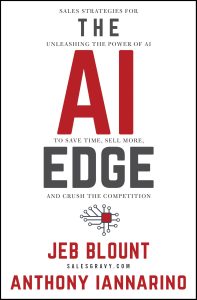
The book is subtitled Sales Strategies For Unleashing The Power Of AI. As everyone knows, Artificial Intelligence (AI) is a hot topic everywhere and the sales domain is not an exception. The book promises to bridge the concepts and practical applications of AI with sales. Does it deliver?

The authors are well-known sales trainers. As such, their names carry some credibility, but are they merely selling or is this a book with substance on the subject-matter? Do they really know and understand AI given their specialty and the newness of the topic? The book was published in 2024. Let’s flip the page.

The first paragraph defines the mission: Save time, sell more and redefine the art of selling. That’s a major claim. The book, throughout, is consistent in that it declares the human advantage in several domains. Moreover, it is soon obvious that this is a sales book; not a tech book. High-level use cases appear on page 16 and these include Personalized Content Creation, Prospecting Messages, Building Prospecting Lists, Automated Follow-up, Advanced Sales Forecasting and Virtual Role-Playing For Training. Immediately after, the book reminds us that the human advantage in core selling remains. AI cannot be you, the book justly reminds us. The authors wittily call such claims the “snake oil of our time,” adding a touch of humour. After about sixty pages of good sales advice, we return to the theme of AI’s role in sales on page 76. For example, chapter 15 was just a recap of what had come before it in the book! There is even more filler content when the book provides an entire poem generated by AI. 

Also, the authors are repeatedly clear that AI hallucinates (makes mistakes) and there are appropriate warnings about verifying for mistakes and warnings about authority bias, which is easy to agree with.

Still, several recommendations require access to the tech stack and admin rights. Even if one has the ability or access to the appropriate assistance, there are not any instructions on offer. Integration of tools is also necessary, making these not out-of-the-box solutions. Sometimes, the manner of engaging in the advice is unclear as well. The question is ‘how?’ when the book recommends analysing something with each recipient or connecting something to the other. Connecting CRM to Marketing sounds logical, but it requires technical access and support, making it hard to implement immediately. Think “intent window” or using “historical data.” 

On a more practical level, suggestions for editing, messaging, corrections and changing to (natural) human language are timely. Ask AI to sound like you by providing your writing samples or a style guide. The advice is to ask AI to correct without rewriting so your tone and personality remain untouched.

The book touches on AI prompt engineering and gives examples. These are probably the best aspects of the book – if you don’t know how to do those things yourself. “Natural imperfections” should stay. I, for one, am all for this. Especially if it finally gets rid of the em dash crap AI is addicted to. Several reminders that everything requires your review.

The authors humorously (maybe) critique sales professionals for generally struggling with writing and grammar. That said, the authors demand that edits must remain human. In general, the sequence is to tell AI first what you don’t want it to do and then, second, what it is that you want. 

On prospecting, the reader is reminded that prospecting can be synchronous (real-time talking) or asynchronous (delayed communication). Synchronous is needed and advised, which is something robots won’t do. The formula for prospecting is to talk to more people, after all. AI, in contrast, is for automation of repetition, repetitive tasks.

The book outlines a prospecting sequence: Target > Message > Channel > Cadence > Touches > Duration > Spacing.

Under Cadence and Touches the sequence is: Phone > Voicemail > Email > LinkedIn > Video message > Snail mail and, again, the telephone. 

It is also crucial when prospecting to personalise as a bridge, but the nature of the beast is that you need a message that works for most people on your list. You will also factor in the economy, industry, et cetera. First, segment your database and focus on the questions to ask.

80% of one’s time should be focused on the discovery. Many salespeople are familiar with the iceberg metaphor. Ask (prospects), don’t tell. Probe further when you get an answer before moving on. Start with the easy questions first; difficult ones next. And always be open-ended.

The epilogue is thoughtful in its description of a near future. It is called The Future Of Sales and narrates the story of a salesperson who interacts with a robotic AI from the moment she wakes up to the end of her day. Yet, this scenario doesn’t exist today. 

The AI Edge is about three things: 

  1. AI usage (with the human always verifying the results)
  2. Several useful prompts and
  3. Doing things outside AI. It offers general sales and prospecting advice. AI, in this sense, becomes a tool to assist salespeople rather than replace them.

As it turns out, this indeed is a sales book and not exactly an AI (only) book. It could also be read as a book on ‘non AI’ selling or prospecting. Perhaps there is a good element of this being a synopsis with elements of other works by the authors. Overall, the book falls slightly short on practical AI usage guidance and real-world scenarios, though this may reflect the current state of available applications.


Aug 312025
 

Both here and elsewhere, there has been an ongoing discussion about what AI (Artificial Intelligence) means for human productivity. A more ominous, and related, discussion concerns the implications of the technology for employment, or, more accurately, the risk of unemployment. A comprehensive Microsoft research paper dated July 22nd, 2025 identifies the occupations most at risk from AI. This paper is a good read, but scroll down to page 12 immediately if you’d like the list.


Grouped by occupation these include:

  1. Sales,
  2. Computer And Mathematical roles and
  3. Office And Administrative Support


By contrast, manual labourers and skilled tradespeople, as well as doctors and nurses, are considered among the safest occupations.

Obviously, considering the latest scientific thinking, being analytical about the information and taking in the research in a clear-eyed manner is important. We all have our inherent personal and occupational biases – including those who work for companies like Microsoft or Nvidia (see below) – which taint our judgments. Yet, it is necessary for us to think less about esteem and societal expectations and more about reality when choosing educational paths and career directions going forward. Advertising Creative Director may sound more prestigious than Dredge Operator, but is it truly more secure in the age of AI? And does the imperative to work make us less choosy about which jobs we occupy? Because perhaps the job didn’t go away, but it surely changed. You are not working alone. You, and your team, are working with AI now.


While we reflect on this, two additional points should be made. First, no matter whether one believes AI’s impact on society will be large, moderate, or small, those estimates are likely exaggerated. The reason is simple: resources are limited. Consider $1,000 set aside for investment: if allocated to Nvidia, that amount isn’t additional growth, but diverted from another potential investment. If that full amount (or even part of it) goes into, say, Nvidia, that doesn’t mean society has gained an extra $1,000 of investment overall. Instead, it means that $1,000 was directed toward Nvidia rather than something else. In other words, the benefit to one area comes at the expense of another, so the net effect on society’s total pool of investment is smaller than the raw figure suggests.


Secondly, to whatever extent AI will impact our lives and jobs, it makes the most sense to scale yourself and become the AI expert for that role. So, Customer Support managers could become the AI Support Specialists, Automation Programmers, Customer Support Analysts, call it what you will, for Customer Support AI. Salespeople or Sales Managers need to embrace AI and fight any redundancy by becoming adept Sales AI workflow managers, AI Sales Architect, Sales AI programmers or Sales AI Operation Managers. Get into your core business processes and become the go-to resource for such knowledge. Here is Nvidia CEO Jensen Huang: “Every job will be affected, and immediately. It is unquestionable. You’re not going to lose your job to an AI, but you’re going to lose your job to someone who uses AI.” Again, Huang’s perspective comes from a vested interest, but directionally, the logic makes sense. In other words, if you can’t beat them, join them.


Embrace AI, become part of the change and help rethink the way your company is organized and thinks about the technology. Functions like chatbots, virtual support agents and content creation are productivity gainers, but surface-level. The real prize is in rethinking your business process for qualitative and quantitative reasoning that is transformational and who understands those weaknesses and inefficiencies better than the user community, that is, you.


Things That Need To Go Away: Not Thinking About Outcomes And Being Reactive And Not Proactive About AI Solutions.

Jul 222025
 

The right solution is key to winning over customers. Words matter. Tonality is important. The right body language is also imperative. Most people agree and understand that the right body language and posture is important when on-site with a customer. The same concept applies to remote selling. Non-verbal cues also apply to video. Body language, consciously and subconsciously, conveys credibility, confidence and intent.

Here are the body language principles to practice:

Do As They Do: Mimicking or mirroring their posture and body language establishes likeness and similarity. This is a form of rapport and trust building. Isopraxism, as the concept of syncing body language is called, helps establish trust.

Stay Within Eyesight: Remain within your conversation partner’s field of vision. You are more influential this way and, moreover, you have a better grasp of whether your points are landing or not. It helps bring them back into the conversation if you nonchalantly wave your hand and assists with maintaining eye contact. Speaking of which, make sure you look into their right eye, which is more sympathetic than the aggression indicating stare into their left eye.

Do Not Sit Head-on: While you want to be in the field of vision, you do not want to be antagonistic. You are not two bulls butting heads. Angle your body slightly instead of facing them directly.

Nodding: A head nod tells the prospect that you are listening and understanding. This gives them a feeling of safety and validation.

Don’t Forget To Ask: Involve them in the conversation and keep them engaged. Not only do you want to match your content to the person’s interests, but you want to make sure you know if your audience’s interest is waning or if they are not engaged. Of course, customers want you to know their challenges, pains and goals so this goes without saying.

Two exceptions come to mind, however.  One study has found that snobbish salespeople increase luxury goods sales. A study from The University Of British Columbia’s Sauder School Of Business indicates snobby salespeople increase the desire to purchase in their buyers. The other is the famous HBR study that suggests companies should remove obstacles and make life easy for their customers during interactions as opposed to trying to delight them.

Those aside, the right body language and posture are conducive to customer trust and prospect satisfaction, which, in turn, can only mean good things for your sales outcomes.

Things That Need To Go Away: Making A Customer Feel Ignored

May 012025
 

Artificial Intelligence has evolved from a buzzword to a revenue-critical lever for enterprises.. Sales and salespersons are no exception and so a number of sales specific AI solutions have appeared on the market.

A 2024 McKinsey & Company report states that companies leveraging AI for sales can experience a “nearly 50%” increase in leads and appointments.

Another statistic claims that inside sales professionals spend 35% of their time selling. The rest? Research and administrative work.

Most importantly, would it not be phenomenal if guesswork, assumptions and shooting from the hip was replaced by salespersons and sales manager with data-driven actions and next steps? Instincts are often correct because they are based on experience, but the power of AI to provide analytics and insights will serve sales, forecasts and replace reactive with proactive.

Here is a non-exhaustive list for anyone seeking a solution or looking to research the right tool. AI now handles lead qualification, conversation analytics, note taking and pipeline automation freeing teams to focus on higher-value negotiations and relationship building. This is a selection of specialized AI sales tools (excluding embedded solutions like Salesforce Einstein, Zendesk’s AI or Microsoft Copilot) that you should evaluate for competitive advantage.

This is not an exhaustive list and, moreover, given the nature of the market will assuredly be dated as soon as the article is published. The author has not personally used or trialled every solution listed. Having said that, given my personal experience, one piece of advice would be to double check every feature/functionality claim and specifically ask if the desired functionality is included in the price or is considered an add-on. In my experience, solutions are new enough for sales and marketing teams to not always be well-versed with their offering and pricing models are still fluid. The same advice applies to any critical integrations – for example to a CRM or messaging software that you use – that may be important to you.

Sales AI solutions:

  • Botpress
  • Chorus (ZoomInfo)
  • Clay
  • Copy.ai
  • Fathom
  • Fireflies.ai
  • Nooks
  • Otter.ai
  • Pipedrive AI
  • Regie.ai
  • Zipteams

Things That Need To Go Away: Assuming Human Control And Personalization Can Be Replaced By AI

May 012025
 

Something former New Zealand Prime Minister Jacinda Ardern told an audience at the recent Zendesk Relate 2025 conference caught my attention. “My experience with people who ever doubt themselves is that they will prepare, they will read everything, they will reach out to the experts, they’ll do their job with humility because they won’t believe they have all the answers,” she said. Ardern’s approach is commendable, particularly when paired with decisive action. She emphasized that governments need to be transparent with the risks, regarding Artificial Intelligence, and take care of citizens proactively. Numerous societal problems have already been associated with AI. In any case, AI still requires human input and guidance.

This made me think. There already are a myriad of use cases for AI that most readers are aware of (see examples on this website), but what is the future of AI? We often say that we are just scratching the surface of AI’s potential – a thought I agree with – but what about the future? What roles will AI play in the coming years? What are some possibilities in the near future? Here is my list that I hope acts as a catalyst for some thinking and to act as a time capsule.

  • Productivity enhancements
  • Prevalence (similar to how the Internet is available everywhere) in many different things and to assist humans enabled by 5G
  • Scientific modelling and breakthroughs
  • AI expert and custodian roles
  • Companionship – for romance, therapy or friendship
  • Powering robots and making them more capable
  • Agentic AI for healthcare, financial services, law offices, government services and translation services
  • Analytics that use NLP to understand and be understood. Analysis and Business Intelligence tools accessible to the masses
  • Contractual agreements aside, AI-generated actors replacing human performers
  • More lies, fabrication and fake news and imagery – virtually indistinguishable from the real things
  • Finally, personally, I hope to see robust AI regulations and oversight enacted.


Things That Need To Go Away: era of reactive and ad-hoc approaches to AI

Apr 112025
 

Quite a few smart people have warned us about the dangers of AI. They demand guardrails and, I believe, most responsible people agree, yet, AI is also powering advancements in climate science, medicine creation, cancer diagnosis and treatment, reducing child mortality and more.

The same technology can bring untold benefits to both persons and companies and organisations of all sizes.

Alphabet and Google’s Chief Executive Officer Sundar Pichai remarks, “I think we are at 1% of what humanity’s information needs are today. It’ll be obvious a decade or 20 years from now.”

Artificial Intelligence (AI) is no longer a distant concept. It’s a transformative enabler that can reshape your industry and redefine how your businesses operate. In my conversations with customers, corporate decision-makers and technology leaders, one thing is clear: everyone recognizes the potential of AI. However, the journey to adoption is far from uniform and, in fact, quite uneven. While some organizations are forging ahead with ambitious AI initiatives (often in stealth), others find themselves paralyzed, unsure where to begin or struggling to secure the necessary buy-in to move forward.

This paralysis often stems from two key challenges: 1. Uncertainty about where AI responsibility should reside within the organization and 2. A lack of clarity on how to take the first step. These roadblocks create friction and hesitation, leading many organizations to delay action. Yet, in today’s fast-paced business environment, standing still is not an option. Inaction is irresponsible and can have consequences ranging from inefficiencies and missed opportunities to falling behind competitors, which is one step closer to irrelevance.

One practical suggestion: Start small. If launching a full-scale AI initiative feels overwhelming or scary, consider beginning with a focused experiment. Identify a specific business problem or process that could benefit from AI-driven insights or automation. Build a small pilot project around it, test its effectiveness and measure its impact. A well-executed pilot can deliver a small but meaningful win and one that not only demonstrates the value of AI, but also provides tangible results, such as improved efficiency, increased employee satisfaction or cost savings. Use these findings to build momentum within your organization. Share the success story broadly, but appropriately after calculating the return on investment (ROI). You have a foundation to scale your efforts now and have the learnings to boot.

By taking this iterative approach, one can overcome organizational inertia while fostering confidence in AI’s potential. Small wins pave the way for larger transformations, empowering your organization to embrace AI as a strategic enabler rather than viewing it as an abstract challenge. The time to act is now! It is a race for innovation. Hesitation is certainly more costly than experimentation. And we also admit that one really doesn’t know what the end-product will be until after the investment!

Consider the below as food for thought and factors that need attention.

What AI Does

Automated Deployment Automated Testing Computer Vision Customer Insights And Analytics
Cybersecurity Development Documentation And Document Generation Modelling And Optimization
Natural Language Processing (NLP) Predictive Analytics Recommendations Testing
Training Troubleshooting Virtual Assistants And Support Workflow Creation And Automation


AI Benefits

24/7 Availability Automation And Efficiency Better And Faster Responses Better Customer Responses
Continuous Learning And Adaptation Cost Reduction Data Driven Analytics And Interactions Enhanced Decision-Making
Frictionless Customer And Professional Interactions Personalization Proactive Actions Query Responses
Risk Mitigation Scalability


AI Concerns

Accuracy Bias Based On Ingested Data Compliance Disruptive To Organizational Charts
Environmental Impact Loss Of Human Connection Misinformation And Manipulation Privacy & Legal
Security Risks Transparency And Institutional Knowledge On Process Followed Trust And Possibility Of Hallucinations


Risks Of Not Adopting AI

Data Overload Difficulty Scaling Increased Costs And Reduced Efficiency Lower Customer Service Standards
Market Share Loss And Reputational Damage Missed Innovation Opportunities Missing Modern Revenue Streams Undetected Security Flaws
Undetected Security Vulnerabilities Weaker Customer And Professional Relationships


Things That Need To Go Away: Being Blinded Whether By Shiny New Objects Or The Absence Of Complete Lucidity