Ali Ghaemi

Mar 202011
 

The word “just” creeps into many sales conversations. It should not!

Whether in the field, or more likely on the telephone, too many sales conversations include sentences like:

  • Just one more thing
  • I just wanted to reach you to say…
  • I just need a minute…

The use of the word ‘just’ is a defensive mechanism by salespeople to imply understanding on their part of the customer’s time and lack of desire and designed to send a message that the customer’s commitment (at this stage) is minimal.

Ironically, the word implies triviality, a junior status and assigns irrelevance to the topic, product/service and the person who utters it. Why would one denigrate one’s own importance, message or potential benefits of the goods or service?

On the next sales conversation just banish the word ‘just.’

Mar 182011
 

…within.

It has long been my belief that nothing can bring a company down, ruin a business or crush a corporation, but the business or company itself.
The competition cannot do it. The economy cannot do it. Natural disasters cannot do it.
Businesses are destroyed through wrong choices, betting on the wrong strategy, picking the wrong president, promoting turf wars and permitting discrimination over cooperation and collaboration and pettiness and intransigence over valuing human resources and being purposeful.

Think of Enron and its fake contracts, Nortel and the billions spent gobbling start-ups without products or a future or any of the plethora of companies that defined themselves too narrowly to address new market opportunities.

The choices that companies officially make, people and behaviours they tolerate or accept and the culture they foster determines success – not what the rest of the universe does.

Let’s explore this from a people’s perspective. A company or organization can take its destiny into its own hands and implement the means to succeed. It may choose the correct leadership, treat its customers well, align itself with the objecives and developments of its target market and also it should mandate internal collaboration.

This is a must because it is not natural behaviour. People’s first instincts are themselves. Everything else only follows.

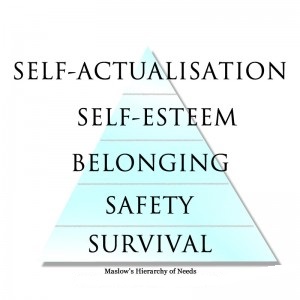
maslow-ALL-300x300

Note: Survival Of Self Comes before Belonging

Given that people assess their own selves above the organization then it is the organization’s job to ensure people cooperate and collaborate. Courtesy, support and assistance should be mandatory.

When the organization succeeds through internal ingenuity and collaboration then it is in a better position to compete externally.

Think about the implications of this. Do you agree that companies don’t have problems until they create their own?

Feb 092011
 

THE CHANGE PROCESS (VIA ANTARTICA)

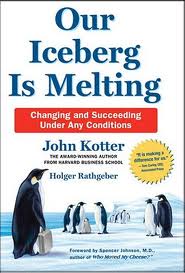
Our Iceberg Is Melting is a short and cute book discussing a serious adult topic. It was lent to me by one of my employees, which made me interested in reading it. The book by change management experts John Kotter and Holger Rathgeber is a fast and easy read and features several adorable illustrations depicting penguins and their habitat. Our Iceberg Is Melting, likely picking up on the theme of Climate Chaos and the recent penguin-themed films, creates a fable of penguins and habitat change to parlay a story about change, how to manage it, deal with it and get groups to adapt and adopt it.

One of the best-known books regarding change is undoubtedly Who Moved My Cheese? by Spencer Johnson. That book was also a succinct read wrapped in the coat of a fable and so comparisons would be logical – even if Johnson had not penned the introduction to this book. Unfortunately, while understanding and being sensitive to the theme and the importance of the topic, I was not a fan of Who Moved My Cheese and the same could be said regarding Our Iceberg…

The author attempts to enamour us and simplify the topic by picking a fable and using lovable penguins to boot, but lost in the shuffle is whether a change was necessary in the first place. No proof is offered. One needs to beware and watch for ‘change’ being used as a crutch and as an excuse for lack of willingness to address issues or drill into problems and challenges. More honestly in this regard would benefit most corporations and entities. Taking for granted that a change was indeed a necessity it is unclear why moving to another iceberg would mean a move to a better environment. Could the new iceberg be undergoing the same change and, therefore, the same problems? Moreover, could the birds be fleeing their problems in lieu of facing and repairing them?

The authors’ allegories and paradigm might well stand, yet a blanket pro-change statement, without examining need or necessity in the first place, is partly what ails many an organization and is unfair to the reader who is told to stop resisting change or else… and no justification is required. Indeed, the author insinuates that a resistance to change or demanding empirical evidence make one a “NoNo.”

Nevertheless, Kotter and Rathgeber offer the following process for enacting change. This seems simplistic, but essentially rational, although, never mind the propaganda effect of posters, signs and visual cues, alongside the need to sidestep and replace opposing views, which the authors advocate.

The process is:

1- Create A Sense Of Urgency (act immediately)
2- Pull Together The Guiding Team (leadership skills and credibility required)
3- Develop The Change Vision And Strategy (contrast the future with the past)
4- Communicate For Understanding (convey the vision)
5- Empower Others To Act (help those who are onboard)
6- Produce Short-Term Wins (an immediate win, no matter how small, is helpful)
7- Don’t Let Up (accelerate the momentum and push hard)
8- Create A New Culture (the new ways need reinforcement for a while).

Feb 032011
 

SCIENCE VERSUS BUSINESS AND MANAGEMENT

In Drive Daniel H Pink, a former political aide-turned author and lecturer, overturns the conventional notions that operate modern companies’ dealings with its people and debunks what we think are true regarding motivation and people management.

Much like a Malcolm Gladwell, who translates academia and science into layman’s terms for wider dissemination, Pink digests behavioural and management science from the last 50 years into a surprisingly effective essay regarding how to motivate human beings, which conventional and accepted ideas are gibberish and which actions are counter-effective. The book is interesting in its audacity and perhaps startling in both its conclusions and how so much that is so tested and known in some circles has not seeped into mainstream business. I say ‘perhaps’ because much of the contents is actually coherent and often what many of us have experienced and subconsciously identified, but never put quite found in one tome and in this way. Many managers, business owners or human resource professionals should prepare for a jolt judging by how seldom these ideas are practiced and, indeed, how often they are resisted. Apparently, much of the business world is still in the Dark Ages.

Speaking of which, Pink begins with definitions of Motivation 1.0 (early/basic man who seeks survival), moves to Motivation 2.0 (the carrot and stick model for reward and punishment) and his central theme of Motivation 3.0, which address intrinsic motivators for creative and non-routine work. Imagine how a reward could be a negative. Pink does! And when one thinks about the impossibility of that notion Pink pulls the example of volunteer-run success of Wikipedia versus the paid staffers of the deceased Encarta, which was previously a product of Microsoft. Perhaps Motivation 2.0 is increasingly irrelevant in the Western world. While routine and programmatic work can be outsourced, heuristic and non-routine work generally cannot. Since job growth in our circles is mostly from the latter carrots and sticks are a dangerously anachronistic paradigm that need to be severely reconsidered. As well as Pink explains the concept well; imagine the ways we have to go when imagining telling a sales manager to forego assigning a bonus/commission-based model to his or her salespeople. Unlikely, right? Pink seriously challenges that type of thinking. Adding rewards to pleasurable non-programmatic work has the opposite effect and indeed make the job unpleasant. Taking the extrinsic reward away renders the job pleasant in itself and gives it a sense of purpose and achievement. Pink will explain that financial incentives will make performance worse. Rewards, science shows, narrow the focus when the work calls for thinking and creativity and excitement. To be clear, he hesitates to render the same judgement for algorithmic work.
Having said that, Pink clearly elaborates and explains that ‘baseline rewards’ need to be sufficient for this model to work.

In the second part of Drive, Pink explains the three elements of true motivation. These are Autonomy, Mastery and Purpose. He then offers examples, actual case studies and techniques for unleashing these elements. Most managers and leaders prefer and seek Intrinsically motivated people (he calls them Type I) to Extrinsically motivated (type X) individuals. What if there was a template for unleashing the latter and harnessing the ensuing talent and energy? To be clear, Pink insists on fairness and equity being a prerequisite, but not as a form of carrots and stick rule. Going back to the three elements, Drive addresses the dominance of purpose over profit, specific goals over constant reward systems and giving people control over their work environments (including team-mates, work hours and tasks) as essential to motivation and success. Imagine it. Pink and many businesses did and the case studies are enlightening. The examples are there, but whether, as the book jacket proclaims Drive is “paradigm-shattering” depends on the dissemination and acceptance of the idea at the top echelon of the business and workforce entities. After all, Daniel Pink is telling sales managers, just to cite one example, to stop the commission-based system and to instead discover that the new hires have longer-term visions of their work. The news is that the message is hard to dismiss.

The book is padded with chapter summaries, conversation starters, an index and even a helpful glossary. This makes it a useful handbook on top of its exciting content. Having read it three times over the last several months, useful and exciting are certainly appropriate words here.

Challenging conventional wisdom could be termed Drive’s first and last word were it not for its drawing from actual academic studies and learnings.

Feb 022011


Here is a compilation video with some nifty achievements. How motivational is it to see individuals achieving these skill levels? Is it a good idea, for the rest of us to have such lofty goals in the first place? Or should we encourage and commend workmanlike behaviour given that it correlates to a majority of people? Is it unrealistic or even unmotivational to find inspiration in such feats? Or just plain fun?

Can humans walk on water?

Feb 022011
 
  • Are you subscribed to your customer and resellers blogs or tweets? Do you have a Twitter account? Share your partners public thoughts with your own followers. Ask your customers and partners about their posts. Can there be a bigger compliment?
  • Do you monitor their news and websites to see what they are posting, what their news is and what they are most proud of?
  • How could you interact better with them using Social Media?
  • Here is a thought grenade: how about inviting all, a segment of, your partners, resllers and customers to an online seminar where you facilitate a public discussion on profitable strategies and what is happening in the marketplace?
Dec 312010
 

… which means the end of the first decade and the beginning of the second decade of the 21st century. For better or worse – which is it? – time flies. Should one change?

As we reflect back on 2010 (yes, an artificial time demarcation point), what lessons do we learn for 2011? The relationship between buyer and seller, manager and employee, marketing and audience and essentially people has changed.

How are we coping with higher expectations?
How are we coping with the burgeoning knowledge of buyers?
How are we engaging the jaded audience?

Are you providing more value in a shorter span of time to your customers than the competition?
As a seller how much value are you offering beyond reactively providing information? Are you a business resource?
Are you connecting personally with your buyers? If your customer is a fan of J.D. Salinger, for example, are you forwarding a review you have written on Catcher In The Rye to them?
Are you giving just a little more? Even one percentage point of harder work is better than the competition’s, isn’t it?

The knowledge landscape has flattened. Where do we fit in for a new decade?

Dec 032010
 

Came across a light-hearted article on purchasing Customer Relationship Management.

“Because when you’re buying a new CRM system, just like when you’re buying a new car, it’s not about what you want…it’s about where you are in your life.”

CRM and cars?

Personally, I shuddered at the thought of a minivan at any stage!

Nov 282010
 

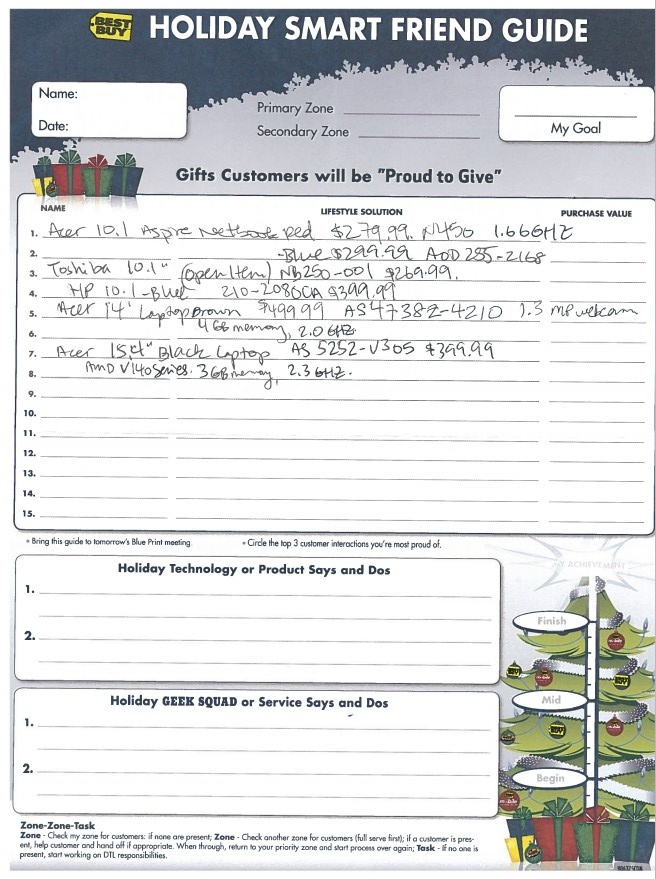
Click to see full size

Dropped by Best Buy where ‘associates’ do not work on commission (although have a host of other metrics leading to the same end-effect).

Here is what the salespeople are given to work with. Taking for granted the commercial nature of the ‘Holiday Season’ the employee hand-out encourages them to talk up products as a “Lifestyle Solution” and to “Circle The Top 3 Customer Interactions You are Most Proud Of.”

So far, par for the course, but what about “… Product Says And Dos” or the fine print instructing employees to stand in the pre-identified first zone “priority zone” before proceeding to “another zone” if the first does not have customers? Finally, they are asked to preoccupy themselves with a “task” and other “responsibilities” if no customers are present anywhere. Everything is to be performed in the order it is spelt out.

Sounds really simple. Is it too much? Is it necessary? What would the employees do without these sheets?

And yes, I was comparing those computers.

Nov 232010
 

If you want your boss to approve of you and your future request, ask for his or her advice, including seeking particulars, and then take it.

In this case, the question one poses should not be general (although that is an OK place to start), but rather one should focus on how one could be more effective on the job and with whom else one should speak. The ‘whom else’ is comprised of people a level or two above you.

Take the advice and implement with yardsticks.

Approach other senior individuals (via e-mail if possible) and ask for time to have coffee or simply to chat informally. Ask about what they are up to in the short and medium term and pivot by asking them how you could contribute and help with the endeavour. See how you can contribute to their goals and/or other goals of theirs you might have heard about. You are being helpful and proactive.

Follow up with the person and share your suggestions and ideas. Feel free to share with a larger group (in a meeting or via e-mail).
It is also appropriate for managers to e-mail the executive team promoting one’s team’s accomplishments.

Once a relationship has been established ask for advice and help regarding how to obtain the position in which you are interested. It might be a specific position or it might be a type of a role. Explain why you are a fit. Asking early on is being pro-active and gets you a leg up!