May 292010
 

How many times have you read a survey indicating that career development is very important to employees? More importantly, how many times have you, as an employee, felt that having a career path is as important to your workplace well being as work hours, job description or benefits?

It is illogical then that so little time and effort is given to such an important aspect of the employee-employer relationship. There could be a myriad of reasons why, but having this type of conversation officially and regularly is also beneficial to the employer. Retention of good employees is key. Improving employee performance is important. Understanding what employees can bring and add to the table is smart.

At the very least, having the time to review the matter is motivating and informational to both parties.

Employees:

1- Make your career happen. Do not let it happen to you because if you do… you might get exactly that. Ask for formal reviews and planning of your careers.

2- Come with statistics, proof and examples you can cite. Be specific with your goals, but flexible. If you do not have enough collateral to bring to a meeting ask yourself why and how you could change the situation.

3- Remember that your goals must coincide with your company/employer’s before anything moves forward. Draw this information out. Be persistent, but respectful. Be honest with yourself if you find your employer to be evasive.

4- This is a process; not a one-shot event. Develop the situation and be consistent. A bi-annual or quarterly discussion is appropriate.

Employers:

1- Create a schedule to assess and plan your employees’ career. This is respectful, responsible and engages the workers with the company and organization. Do not limit the conversation to these occasions however. Why deny yourself the opportunity to be informed and up-to-date?

2- There is always something else to do. There is not a thing that is as important as your human assets. The chair and the walls would mean nothing without smart and dedicated employees.

3- Open your mind to your team and whether there are opportunities for cross-alignment internally or if one employee can assist with the development of another.

Both employee and employer need to discuss short and long-term expectations and set a measurement and feedback mechanism.

May 262010
 

Drive: The Surprising Truth About What Motivates Us is a new book by author Daniel H Pink. In his 2009 book he advances the notion that paying commissions to salespeople is possibly a wrong method to motivate. He argues that companies would positively influence salespeople by removing the carrot and the stick. He goes on to assert that paying a straight salary improves the customers’ experience, promotes teamwork and collaboration and reduces the complexity with which management has to grapple. His case studies should make for good reading.

This idea might sound anathema to many in sales and sales management. However, it is also clearly the case that many in sales fail despite having the carrot of a commission and the stick of not being able to put food on the table over their heads. Pink, reportedly, has case studies as proof and demonstrates that sales have increased where the commission structure has been removed.

I look forward to reading the book to see whether he has a compelling case or not.

Apr 172010
 

Steps To Effective Listening:

1- Listen – yes, oddly enough one has to listen without prejudice or interrupting.
2- Listen For The Main Idea – what is the main and specific idea being put forth?
3- Listen For The Reason – what is the rationale and reason behind the ideas discussed or proposed? Is the premise correct and based in fact?
4- Organize – give the message conveyed an organization and order. It helps results gel and and for the listener to retain the information.
5- Ask Questions – once the speaker has ended ask questions. Be sure that your own biases have not tainted what you heard.

Taking notes is a good idea. It shows that the listener is interested. It also is a better method of keeping record than memory alone.

*Things That Need To Go Away: listening meetings where the decision has already been made and conclusion already reached.

j03992151

Apr 042010
 

The PricewaterhouseCoopers 13th Annual Global CEO Survey is out. After surveying 1,198 “global business leaders,” the consultancy has summarized some of its findings on topics related to how CEOs plan on steering their companies forward.

http://www.pwc.com/gx/en/ceo-survey/index.jhtml

A global trend is emerging. CEOs are more confident in achieving their 2010 revenue objectives. CEOs in emerging economies in South America and East Asia are even more confident.

http://www.pwc.com/gx/en/ceo-survey/ceo-survey-key-findings.jhtml?WT.ac=flash_02-2010_ceo-survey-hp_key-findings

In general, more conservative thinking dominates the results. Internal cash flow optimization is seen as more important than bond or equity issue or borrowing. Better penetration of existing markets has the CEOs more preoccupied than new geographies or new products.

http://www.pwc.com/gx/en/ceo-survey/data-smarter-growth.jhtml

25% of CEOs believe there will be more headcount cuts. 39%, however, will be hiring in the next 12 months. The most hiring is in the professional services area.

http://www.pwc.com/gx/en/ceo-survey/prospects-for-recovery-employment.jhtml

However, with the planned reductions which have already happened 48% plan on hiring suggesting that the reductions were overdone. The charts break down the hiring areas by geography, sector and talent.

http://www.pwc.com/gx/en/ceo-survey/data-talent-agenda.jhtml

Feb 172010
 

I was recently part of a discussion on CRM and the best way to choose a Customer Relationship Management package. With CRM/SFA/contact management becoming mainstream and accepted more and more questions come up about which one of the myriad of options is the better one.

I have been part of sales team for Oracle CRM and Sage CRM. I have also been the user, competed against or part of the buying process for Siebel, SAP, Salesforce and Sage. Here are my thoughts.

First and foremost, the starting point should not be the features and functionality of the technology. The departure point is the needs of the buyer, the existing processes of the company, how they need to change and improve and the goals that need to be realized. If these factors have not been mapped then the company is not ready for a CRM purchase.

Moreover, which software has proven capability in the buying firm’s niche, vertical or broad industry?

Next, remembering that CRM is there to enable the company to know itself and its customers, how does the productivity tool play with the company’s actual data and processes? This is where a customized demonstration including the aforementioned information is very helpful. No, not a generic demo and no not a downloaded sample of the program. Can one see the needs fulfilled in the CRM and can one see the desired improvements fulfilled in the potential package? If any integrations are required, can this be demonstrated? What about the reporting capabilities, formats in which the reports are available and, crucially, their ease of use? Which vendor gives you the best training for their product?

Incidentally, avoid paying for features one does not need and will not use.

I don’t want to get into the hosted versus on-site flavours of CRM discussion here, but should one be considering a hosted or SAAS (Software As A Service)/cloud software (the cloud refers to the nebulous Internet mode of delivery) the question to ask is what happens at the end of the contract period. Who owns the data? How can one receive it from the hosting company? Is there an additional fee attached to these stipulations?

Of course, cost is a factor. SAAS operates on the leasing model (low up-front costs/potentially more expensive overall), while the traditional method gives you the software in perpetuity (except there is an installation cost and time-line that needs to be factored in). As I said, won’t get into this aspect more at this time.

The technology’s capability will only follow the determination of wants, needs, processes and desired outcome strategies. Mastering these has the added benefit that they necessitate consulting and working with the end-users of the product, thus helping obtain their buy-in. What is the purpose of buying CRM if sales, service or the marketing department really do not want to use it?

Untitled7

Jan 032010
 

Which one of the below have I heard recently?

  1. I got hired when I met the VP at a class.
  2. Many of the people in the office were hired after meeting each other at church. That is normal at my company.
  3. The Vice-President hired me before my eventual manager met me. No one told my manager.

The answer: 1, 2 and 3.

Hiring a salesperson is one of the biggest decisions a company makes. Managing that salesperson (aligning his or her goals to the company’s objectives) to be successful is going to underwrite the success of the firm.

Hiring a salesperson should never be left to feeling. ‘More science, less art’ as I always say.

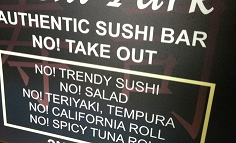
Part of the problem is that the hiring managers really do not know how to hire. There is a general notion of the kind of salesperson should be hired (very much like the general public likes to eat Sushi, but doesn’t know enough to stay away from Kushi i.e. Korean ‘Sushi’ or Cushi i.e. Chinese ‘Sushi’), but the feeling is never formalized. Given this dilemma, it is no wonder that salespersons are often mismatch.

authentic

Any company and its hiring team need to have formal and written criteria on what constitutes a good hire. As importantly, the plan is useless if not followed. No more, “I liked her. She seemed aggressive” platitudes.

A good hiring process includes:

  1. A formal qualifications list derived from industry best practices, company objectives and what has worked at the company.
  2. The interviewer(s) need to be familiar with the position and its requirements.
  3. The candidate should be able to sell the interviewer on him or herself and their track record of success.
  4. The candidate should be able to sell the interviewer on a product or service. This doesn’t need to be the company’s own given that the person is, as of yet, not intimately familiar with those.
  5. The candidate needs to demonstrate a presence of mind and the ability to handle surprise questions and unexpected situations. The reality is that customers are more knowledgeable and educated than ever. Since no one can predict a prospect’s next question or reaction or an existing customer’s issues being able to respond with knowledge and respect is important.
Dec 062009
 

There are several do’s and don’ts that a new manager needs to consider right after the ‘congratulations’ phase.

A new manager is typically chosen because he or she has not only succeeded in the most recent position, but also because there has been a demonstration of potential.

Be aware that someone above has liked your character and trait and found it useful for the organization. This makes it easier on how to act next. You don’t need to change that much. However, that doesn’t mean that you should keep doing what you were doing in your last job.

1- Stop Being Tactical. It is time that you stop doing the job. You can stop dusting the desks now if you are a manager for a janitorial service. After all, you cannot clean enough to cover for everybody.

2- Start Being Strategic. Your skills need to be leveraged for the team. It is time to tell your team how you did it and what actions and skills yielded results. You are now standing behind the group and directing. If that is what you do, your team needs to learn from you how you managed to chop the heads of more fish on a daily basis than anybody else. Start teaching others how to clean, sell, cut the head of the fish or whatever your company does. However, please do not confuse being strategic with boiling the ocean. Strategic means picking and choosing what can be changed and improved efficiently and within a permissible time-line. That implies not everything could.

3- Understand That One Approach May Not Work For Everyone. While one person might be motivated by a pat on the back another might need one-on-one coaching. In other words, you need to customize the management line of attack to different team members.
Do you know your team and their likes and dislikes? That will help you avoid issuing decrees or transferring orders from above and expecting that everyone would be ready to go. Take the time to listen.
Moreover, and I have always found this to be critical, you need to work more with those on your team who need more help. In other words, help those who are not where they should be and get out of the way of success. Yes, you are still the manager, but those who are doing well need to keep doing what they have been doing successfully. Their techniques, know-how or methods need to be transferred to those who are not doing as well.

4- Manage People And Processes Not Statistics. So many new managers miss this. Statistics and numbers are tools that aid and assist. They are not the holy grails of success. Remember that success is a process and not a magical conception at the end of the day. Use all the tools to assist, guide and motivate your team to do what they need to do better as part of a multi-pronged approach. As a trusted manager, you need to not win the battle (‘you skinned only three fishes today!’) and lose the war (‘my team hates me’). A manager needs to help the team and report to upper management so the numbers need to be counted. However, many new managers confuse the tools required for reporting up with a club with which to hit employees on the head.
How often do you congratulate and delight your group?

5- Be Respectful. It is part of the soft skills required to be an effective leader of others. A climate of fear and intimidation loses its effect quickly. The micro-manager who thinks acting rudely works should remember that such short-term thinking causes more harm in the long-term.
There are things that are going well, employees who are doing well and things that reasonably can remain as is and even should be watered and nurtured. Acknowledge that and do no harm.
Open lines of communication and understanding precede respect. ‘You need to clean three more units every week come hell or high water’ is nowhere nearly as impressive as ‘how do we become even more efficient and organized so you guys can do three more units every week?’ And here is the key to asking that last question. Listen, follow-up and enact. Pose a perfunctory question and watch how fast you lose the trust of your team next time you need actual feedback. Communication is integral to respect.

Perhaps in a future post I will discuss the other portion of a manager’s job – the reporting up part – that freshmen might not have an exact handle on, but for now I will just say that organizations need to facilitate the above for their managers.
After all, there is very little managers can do to become effective leaders if the company president, for example, wants the new manager to hit the staff on the head with the proverbial club. In this context, it is important that new managers remember that communicating up (i.e. with one’s own manager) is not only about reporting numbers and results, but also about understanding company/group strategies, so these can be communicated to the team, as well as about protecting and promoting one’s employees.
manager

Nov 262009
 

Common wisdom in sales and management circles has revolved around the need to set personal goals, visualize, negotiate, and achieve.
A new school of thought suggests that the secret to success could actually be to take the opposite route.
Two new books regarding happiness, success, communication and persuasion argue respectively that happiness should not come at the expense of realism and the way to negotiation is to be receptive and listen with purity.

Barbara Ehrenreich’s Bright-Sided: How the Relentless Promotion of Positive Thinking Has Undermined America, from the author of over a dozen other books, has used her experience as a breast cancer survivor to argue that the advocates of positive thinking are doing their followers a disservice. She insists that being positive about everything is not always good or superior. In other words, in corporate-speak, not every problem is a challenge and not every challenge is an opportunity. Ehrenreich claims that the incessant abuse of positive thinking has lead to a culture of not confronting problems. This school of thought leads to tangible problems.

Dr. Mark Goulston’s Just Listen: Discover The Secret To Getting Through To Absolutely Anyone comes from the perspective of a psychiatrist and an FBI negotiator. He claims that the contemporary needs for ‘producing’ costs us business and personal relationships. Should we accept that sales, marketing and management have relating and relationship building as their cornerstones then we would do well to delve deeper into his thoughts. The book takes the stance that the best way to achieve what we want – be it a sale, a promotion or a concession – is to be receptive to the other party – i.e. empathy. The book insists that taking a more ‘natural’ stance is actually the better way to succeed. Goulston believes by listening, and listening even more deeply, could one get through to the angry customer, narcissistic co-worker or dissatisfied employee. He goes on to insist that the social media does us a disservice by emphasizing quantity over quality. According to the book, the best way to listen is to listen without an agenda. This would be the purest form of listening. Oddly enough, he does have a Facebook account!

Just Listen To Buy The Book

Just Listen More information

justlisten

Bright-sided To Buy The Book

Bright-sided More information

brightsided

Jul 122009
 

As is often the case the biggest impediments to progress and productivity stem from within one’s own company. A recent account highlighted such a situation. Lacking a proper collaboration tool that enhances decision-making, coordination, collaboration and remote brainstorming a sales team sought the launch of an appropriate tool within the department.

The group was looking to expand beyond e-mail and conference calling to something less regimented and more open with more control back into the hands of the relevant users. This team wanted to spread knowledge.

  • The response from IT: the installation of such a tool requires CEO approval.
  • The rationale presented: all non-routine expenditures and time spent by IT on new projects needs C-level approval.
  • The no-win situation: The chances of anyone sticking their neck out to submit the idea or anticipating personal interest from the company president were minimal. Despite many options, such as a Wiki or a forum, being freely available and costing the company next to nothing in purchase price or installation the project was DOA.

With the executive rarely taking the lead on the usage of technology and not being directly involved in departmental interests the said sales team had to stick with and make do with what was already in place. It was a case of an unwilling corporate culture mired in inertia and micro-management.

Companies that unleash the creative juices and allow bottom-up movement are the ones, which will prosper. Old school is old and this is not school anymore, folks.

Sales, marketing, project management, product management IT and even the executive would benefit from technologies such as a forum, Wiki, Sharepoint/IBM Connections/similar, blogs, etc. technology. Collaboration and knowledge sharing are the business of any company and enabling siloization of information is out. Executives should awaken the energy in their employees and welcome (and in fact lead in usage of) real-time business tools and productivity ideas. The fastest way to encourage employees is to not install unnecessary barriers in the first place. It is, by definition, the executives’ job. Employees who are not thus empowered may abandon their interest and ideas or endanger the companies’ proprietary information by going the external route i.e. start using Yahoo or Google Groups. This is not an ideal situation.
Time to encourage innovation. Collaboration and discipline are not opposites.

May 182009
 

Many studies and surveys correlate handling pressure and a crushing workload with being seen as responsible and effectiveness. Such studies probably over-emphasize the impact of hard work and dedication and diplomatically minimize talk of office politics and the politics of the corporate jungle. Nevertheless, there is no denying how managing one’s workload is conducive to being seen as efficient not to mention maintaining one’s sanity. Ironically, as corporations lay off people they expect the remaining employees to cover for those that were let go.

In fact, to move up in a corporate structure one must be seen as cool, calm, collected and in control. Nothing says ready for promotion than underutilized and not busy enough!

This is why it helps to be efficient.

  1. Place calls early. Busy people are more likely to pick up the telephone or respond between 8:00 to 9:00. Moreover, an early message is more likely to get returned on the same day.
  2. Multi-tasking is your enemy. Concentrate on one thing at a time. Place the telephone on ‘ Do Not Disturb’ and uncheck the notification alert on the email program.
  3. Report more not less. Delivering more does not signal that you need a bigger workload; rather it tells your manager and company that they do not need to look over your shoulder.
  4. Never, lose your cool. It is imperative that you show grace under pressure and never melt under a deadline.
  5. Most importantly, be organized. Take time upfront to develop a rational yet simple filing system whether in a drawer or on the computer. You never know when a graphic may come in handy once again.

These tips help one finish the job without sweat and make it home in time for dinner.

The path to promotion or potential advancement is hardly a mystery then if the political end is taken care of. Aside from efficiency and control, company executives are expected to:

  • Be educated. A Masters degree is better than a Bachelor’s is better than a Diploma, which is better than a high school degree.
  • Maintain a professional image including personal hygiene and quality attire.
  • Have a more diverse background. Being at the same company in the same country for 15 years means you are stuck.
  • Sneak in some operations responsibility, duties or a job into the business or technical mix of things.
  • Work or communicate with other offices or emphasize it should you be well-travelled.