Ali Ghaemi

Jul 132015
 

I wish I could say this graphic is mine. Alas, it is not, but I like it a lot.

54c605b0-71ef-46ff-8f97-b3cd9bd73d04-medium


In fact, since it was sent in, if anyone knows where the source is please tell me for appropriate credit.

The point is what these pages have talked about before herehere and here. Employees are precious and finding good ones is difficult. Keeping good ones is as difficult. More pertinently, however, is the question on how to keep employees.

Many theories float out there, but the notion is that one solution does not fit all. While managers and human resource teams talk and practice team meetings, casual Friday days, commission structures so on and so forth any of these schemes is probably missing the mark the majority of the time.

Employees are humans. Humans are a diverse group. It remains the job of the manager, executive and human resources to understand each individual and work with (motivate) that person (employee) individually.

*Things That Need To Go Away: making employees happy through actions and activities that make managers pleased. 

May 042015
 

Is Salesforce.com on the auction block?
That was the report last week when Bloomberg reported that the venerable Cloud Computing Sales and Marketing application vendor has been approached by a suitor to be taken over.

The approach and the need for Salesforce.com to be sold are not surprising. The company has been a leader in CRM and platform computing the cloud. Its desirability is not in doubt, although its leadership might have peaked. Moreover, despite its surging revenues (by another 33% in the last year) the company has always suffered from low margins. There are two reasons for this. For one, the company spends heavily on operations and marketing. For another, the company has been an acquirer of companies and technology wading into marketing to bolster its sales-side offerings.

Last Wednesday the 29th of April the company’s stock took on 9% more value to give the California-based firm a valuation of $49 billion (US). That already is above the $44 billion (US) a suitor was ostensibly offering. By this week the value had fallen to $46 billion. Nonetheless, any buyer would have to look at book value plus premium to grab the company. This might mean a $60 billion (US) price tag. This is a truly mighty sum. Moreover, the company has $908.12 million (US) in cash on hand and twice that in receivables.

So, who is the potential acquirer? The company’s heft makes for very few suitors. Oracle is a serial acquirer and king of the nominations. Oracle is in the CRM and Cloud business already selling its own software built in-house or originally developed by Siebel. Oracle has approximately $44 billion (US) in cash and receivables. Safra Catz, Oracle’s CFO, was characteristic in responding dismissively. Nonetheless there is always some fun and games between those two CEOs who have since patched things up again. Larry Ellison is a founding investor in Salesforce.com. There is SAP whose spokesperson indirectly refuted interest. The companies have talked in the past, but not in regards to an acquisition should they be believed. There is Microsoft, whose Dynamics software has been the sole serious roadblock in Salesforce.com’s domination. As mentioned here Microsoft has an agreement in place with Salesforce.com. More importantly, Microsoft’s CEO since 2014 Satya Nadella is completely focused on the Cloud and the mobile experience. The Redmond-based giant is sitting on $95 billion (US) in cash and short-term investments. Microsoft’s Dynamics CRM is reportedly holding onto a 6% market share versus Salesforce.com’s 17%. Microsoft and Adobe announced an agreement last week as well. See the below link for reference to Adobe’s marketing play. A few observers have also pointed to Google. A dark horse is IBM. The last name officially exited the ‘applications’ domain years ago, but in actuality plays in the field through its financial/business intelligence/analytics offerings. Regardless, IBM may be interested in Salesforce.com’s Cloud technology. Could IBM be interested in taking Salesforce’s CRM off Oracle database and unto its own DB2?

Reality might be the Salesforce founder himself is ready for a sale. He has tried various strategic initiatives and agreements – including an attempt to build in-house financial software and tie up with Intuit in 2011, which was quietly discontinued in 2014 – to little avail. Subsequently Salesforce invested in Financial Force .

One last point for you readers: Salesforce’s annual revenue is in the $5 billion (US) range. taken purely from a revenue standpoint a $60 billion (US) deal would take 12 years to pay off.


Mar 092015
 

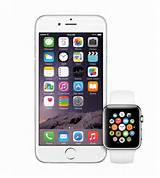
Initially announced in September of 2014, Apple today took the veils off Apple Watch. Unofficially dubbed the iWatch, the Apple Watch was shown off today by Apple CEO Tim Cook in San Francisco. The Apple Watch will be available to pre-order on April 10th and available to buy starting April 24th. Apple retail staff are being coached on how to couple the watch with iPhones.

While expectations are high for any product unleashed from the Apple labs, there is extra pressure on Cook and the Apple designers as far as Apple Watch is concerned. It is the first completely new product by the company since the death of Apple co-founder, and Cook’s predecessor, Steve Jobs. It has been four years since then.

In his presentation Cook cited the health apps, ‘tap’ communication capability and its appearance.

Coincidentally, Apple Watch is reminiscent and nods to Blackberry in 2 ways:

1- Like the early Blackberry PlayBook the Apple Watch relies on being paired to an iPhone for much of its functionality.

2- Apple has introduced a Gold Edition of its watch. Many may know that Blackberry has had a series of gold and gold plated high-end phones.


Here is the line-up of Apple Watches:

Apple Watch Sport, 38mm: $349 (US)

Apple Watch Sport, 42mm: $399 (US)

Sapphire and steel Apple Watch 38mm: $549 – $1049 (US), pries depend of the wrist band picked

Sapphire and steel Apple Watch 42mm: $599 – $1099 (US) and

Gold Apple Watch Edition: starting at $10,000

Likely the Apple Watch will soon be untethered and upgraded by Apple, but in the meantime what do you think of Apple’s latest “revolutionary” products?


apple watch apples

Jan 252015
 

A SALES BOOK OF LITTLE THINGS, WHICH ADD UP

Thomas Freese


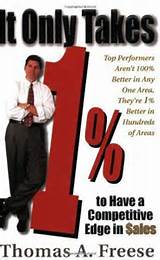
Book number two by Thomas Freese, the author of Secrets of Question Based Selling: How the Most Powerful Tool in Business Can Double Your Sales Results, is not a sales methodology program. Rather, it is a collection of 100 lessons covering sales. Per the title, the idea is that doing so many things just a little better than the competition is a winning proposition – as opposed to being a whole lot better than the completion in one or two things.
The book is rather old now. Take a look at the older book’s picture inside – yes, Thomas is not averse to advertising his other book or services herein – to see what I mean, but the QBS material was good and so is the follow-up. Indeed, this one covers that one and recaps some of it to the benefit of the reader. There is the obvious insistence on asking diagnostic questions. This requires deliberate preparation by the salesperson. Freese is known for his implication questions (a la SPIN Selling) and against pitches. It emphasizes that selling through an internal champion is important. Since they do not have sales training coaching them with positioning statements is as important (a la Sandler). Freese is for creating curiosity and against FAB (Feature, Advantage, Benefit selling). To achieve conversations with higher levels of the customer he suggests saying: over the past months we have talked with a number of your employees but I am concerned we are not addressing the real issue or the big picture. My favourite lesson, however, is about working hard being the best technique..
As a process Freese talks up PAS (in order: Problem, Alternative, Solution) and not SAP, which he believes the competition and traditional selling utilizes. P or Problem is addressed by establishing credibility via those short diagnostic questions. One wonders how he explains that over at SAP if he gets a gig there! He notes that buyers do not have needs, which is why one must transition from presentation to discovery.
Establish needs by asking a few questions to build value against instead – the uncovered needs fuel prospect interest.
Elsewhere on page 131 a lesson advises that if you sell yourself as one smart person whatever you are selling will sell itself. On page 136 there is some counterintuitive advise to not necessarily follow up with prospects, but rather to jot a note on a fax (yes, dated) or other correspondence and ask them to follow up.
On page 155 Freese talks about becoming comfortable at the customers’ by taking the jacket off. This one is noteworthy not only for its advice, but also both because it is the opposite of traditional sales advice and also because it shows that the author is a little bit of a rebel. Who knew? Once at a customer’s office he was prohibited from taking his jacket off. What does he do? In defiance, he stealthily takes his shoes off, which is funny. For the record, my rule of thumb has been to always dress one level more formally than the customer.

Amidst the 100 counsels there are a few obvious ones or information one has seen elsewhere. First, given the format it is reminiscent of compilations like The 25 Sales Habits of Highly Successful Salespeople.
One, for example, is to always offer customers several price options in order to uncover the customer’s budget and also be able to sell more and more often. So here are a few final notes about the book: Thomas Freese has actually been in sales and gets it. The book is slightly dated as times move fast. Either way, the book is easy to read. The writer makes the reader comfortable by telling us he has carried the bag, admitting there are so many sales courses and classes salespersons have probably sat through and that many may have been boring. Of course, he sells himself ad nauseam, which is not so bad, in this case, because one gets anecdotes and recaps from his earlier book.
Finally, who does Tom think is the best salesperson ever? Why, Mrs. Bill Gates of course.

Jan 162015
 

2014 seemed to be the year that Wearable Computing would truly take off. Manufacturers like Google, Apple, Samsung and Sony were looking for leadership mindshare and revenue dividend in the fledgling market.

http://www.alighaemi.com/wp/?p=1645

As it often happens, hype and hyperbole dominated the market. While major projects and product announcements have come to naught, it is the smaller and less spectacular advances which have actually been market successes. Wearable devices with simpler and more focused functions (like for joggers’ heart rates, steps, balance, etc.) have become ordinary while watch-computers have not. Fujitsu has just announced a product, called FUJITSU Vehicle ICT FEELythm, which monitors drivers for pulse waves and nerve activity and warns them in case they are dozing off. Here it is: http://www.fujitsu.com/global/about/resources/news/press-releases/2015/0119-02.html.

Case in point: Google has cancelled the manufacture and sale of the vaunted Google Glass.

True to corporate form the corporation is describing the move as ‘growing up’ and that the product will be back, but reading between the lines is simple. Not only the product and its price point of $1,500 did not reach critical mass given a lack of utility and application, but many bars, restaurants and cinemas had actually banned the device. Google Glass has moved out of the X division and not be considered a cutting edge undertaking. Whether it would actually come back is to be seen.

Google Glass

Google Glass

Whatever the case, it is undoubtedly a setback for Google and the wearable computing segment.


Dec 192014
 

When it comes time to choose a new sales manager one of the topics most discussed and considered is whether to hire internally or go outside.

On the one hand, companies need to provide a career path for their employees. Most companies have team leaders or salespeople who aspire to leading and managing teams of their own. Addressing those motivations and maintaining seniority or meritocracy are valid considerations. On the other hand, companies often feel the need to hire from outside to acquire a certain skillset and experience that is not immediately available within.

The most heated discussion happens when a successful salesperson aspires to or is about to be promoted into management. There is plenty of literature out there warning against hiring the best salesperson into a leadership role – and let’s be frank many do not do it simply because they do not want to lose the wins the salesperson brings in. There are also plenty of reasons (like career paths, motivation, respect, keeping knowledge and expertise from walking out of the door) to promote the person from within.

managing worldwide

Personally, I have both been promoted from within and been hired into an organization as a manager. At times it was a difficult transition, but it worked out at the end. Having said that, hindsight is 20/20.

Salespeople, very successful ones anyway, are tireless, motivated, single-minded, hungry and do not give up. Not every salesperson on every team answers perfectly to that description. As I have written often a decent manager is flexible, sees and understand diversity and gives plenty of room to making the circle whole by responding to different direct reports’ needs and aspirations.

Will a single-minded salesperson make that transition into a successful sales manager? Maybe and maybe not. Then again, it is hardly guaranteed that an outside person would be a successful hire. Rule of thumb remains: hire a good proportion from within and supplement it at all times with fresh blood to allow the latest and greatest seep into the department from outside.

Back to the internal promotion however. This new manager may be operating at two extremes with his or her new team. At the one end is choking the team with micromanagement and pressure. Experience (correctly) tells the new manager that hard work and intensity pay off. The manager demands to see that from the team. At the other end, the manager gives the team too much leeway and operates too often on faith. After all, the salesperson was self-motivated and went out there and made things happen. It would not be strange to expect that the sales team would act in the same way.

Again and again, we come back to keeping an open mind, understanding people and being flexible in approaching different people on the team in unique and personalized manners. That is the reality of sales teams and the material any manager must work with.

By the way, there is no other way. The sales team is now responsible for selling. The manager will be consulted and brought in. The manager will inspect and advise. The manager will become an escalation point and shoulder to cry on, but at the end of the day the manager cannot be the one doing the selling and must let go of the act of leading the sale to customers. It is obviously imperative that the manager quickly figure out what the motley of characters and personalities on the team need to make it happen.

*Things That Need To Go Away: not helping by putting them in the wrong position.

manager


Nov 152014
 

Do you want to ramp up your job search and potentially improve your chances at obtaining an interview? Consider creating a personal Value Statement or Value Summary to be sent and shared with your résumé.

Traditionally, the résumé is meant to get you an interview, while the actual meeting will allow you to progress to the next level to obtain the job.

Consider going the extra mile and incorporating the experience, skills and accomplishments you would convey at the interview in a Value Statement you would include and provide early on with your résumé.

It allows the hiring manager to expressly read what one hopes the résumé would convey. Moreover, it might even serve as practice for the actual interview conversation.


The content of the Value Statement would differ based on the résumé, experience and nature of the position of course; however, below is a technical sales sample of categories that need to be filled in with specifics.

  1. Sales Strategy (specifics are the sales process)
  2. External Customer Management (progress, commonality, building trust and commonality)
  3. Internal Customer Management (working with colleagues and departments within the organization)
  4. Relevant Industry knowledge (value propositions for SIC, Key Business Requirements and outcomes in targeted industries or product field)
  5. Business Acumen (timeliness, sympathy and care for customers, prospects and other people, propriety and EQ)
  6. Technical Acumen (knowledge of product, solution or other tools needed to do the job or mandated to be taught to others)


Untitled


Aug 032014
 

“YOU CAN EITHER FIT IN OR STAND OUT. NOT BOTH”

linchpin book


The Sub-title for the book is “Are You Indispensable?” Those are mighty words in a modern economy that has been sold to us as a normalized state of flux where being mobile and flexible are sold as a given virtue.

In Linchpin, prolific author, marketer, pundit and thinker Seth Godin, exhorts and espouses the imperative to become a namesake person by leading, gifting, giving, standing out and generally not be “a cog in the giant industrial machine.” Godin asserts that linchpins who lead us and connect us in this manner, counterintuitively, will have secured their present and future as today’s economy is ruthlessly punishing the fearful. There is no map on how to go about this, but a Linchpin rejects the compliance lessons he has learnt at school and at work and instead of being silenced and cowed charts his own path of “genius” via the aforementioned qualities, by creating value, chucking the rule book, making a difference and creating order. The assumption here is that one wants to be a linchpin and cares enough in the first place.

Before continuing, however, it should be pointed out that while the above promise does indeed come across as praiseworthy there are plenty of reasons to go in doubting both this book and its author. After all, motivational speakers and modern age ‘gurus’ are a dime-a-dozen. Moreover, while many people have positively commented on the author’s Purple Cow, and other works, his The Dip seemed personally unimportant and incomplete to me. Even worse, my skepticism is reinforced when recalling that this is the same author who sifted through online directories to come up with a printed directory called E-Mail Addresses of the Rich & Famous in 1994, with which he annoyed a few rich and famous people by printing their e-mail addresses, but then would release a book called Permission Marketing in 1999.

With that declaration in place what about Linchpin? The core concept is sane and the assertion noble. The author’s reminder that the traditional workplace, media and school perpetuate myths and render one compliant in exchange for stability is not odd, but that world is gone. Furthermore, Godin’s ridicule of mainstream nonsense mongers like Thomas Friedman is one of his many progressive arguments and another cause for applause.

In the book, which as said comes across as a motivational speech-cum-rally, there is a whole lot of pandering and a whole lot more of encouraging. Linchpin, the author explains, is a matter of attitude and not learning. It is about people who put in emotional labour. One has a choice and one has to resist the resistance, push back the “lizard brain” and chart a path by creating value.

This new Linchpin way is the new bargain replacing the old money/job/stability-for-compliance and conformity order. The new proletariat owns the means of production (computers, say), which is a shocking statement that is far from true and even refers to Friedman’s “world is flat” drivel. The only difference between a mediocre rule follower and a linchpin is that the latter has never bought into the self-limiting line of thought or, my addition, has freed himself from it. Page 43 of the book has a diagram in which Godin depicts being his favoured Linchpin as a confluence of charm, talent and perseverance. A tall order, sure, but recall that we are all geniuses in something at least (patronizing?) or could be so by changing our attitudes. The race to the top is achieved by leaning in, persevering, throwing out the rule book, not giving up, creating art and giving it freely. Somewhat paradoxically, on its surface, a linchpin says no 1- never (always finds a way to say “yes”) or 2- all the time (being a visionary means uttering “no” is with good intentions given how saying “yes” obstructs the art and the achievement). Godin, congruently, comes out against the concept of time for money/work for pay. He deems selling oneself to the highest bidder cheap and asks the reader to opt for creating art instead. The concept, as espoused on page 87, really does seem to target the core of the capitalist system. As cheekily, and on page 79, Godin advises against creating resumes and concealing one’s true self in order to get a job. After all if one has to conceal his identity to obtain a job, then he needs to bury it in order to keep the job.

In the second half of the Linchpin Godin drops the actual reprise of the word “linchpin” and goes about supporting his premise by lateral assertions. Here one learns that linchpins are all bout passion and art. Moreover, it is not art if it is not offered for free and freely. The more one gives away the more one receives. “The easier it is to quantify, the less its worth.”

How does one know that the lizard brain is at work resisting the said concepts? Here are examples: one does not ship product/art/results on time. “Late is the first step to never.” Making excuses, suffering anxiety on what to wear, procrastination demonstrates a lack of desire to learn new skills, start committees instead of acting, join committees instead of leading, not asking questions or asking too many, be boring or waiting for tomorrow. The whole discussion on shipping and not resisting the “lizard brain” is expanded upon with a touch on neurology and evolution. Godin insists that we abandon fear and that the more one hides the more likely it is to fail. Find the wind of resistance and move towards it and face it down. A successful artists completes the idea – although even false had had ideas.

Having said all of the above, Godin either seems to misunderstand the nature of some people or being American plays the brainwashed game. He claims it is a pity that a chance encounter with an ex-US soldier showed how said former soldier/current sales guy is simply following his boss’s orders instead of being an artist and going above and beyond. Clearly, soldiers are more courageous and talented than that! In fact, all jarheads are trained to comply and outsource thinking and reasoning. Obeying standard rules and not questioning is the way of the soldier. Given such an error one wonders what Godin was thinking.

Where he makes more sense – but not necessarily being correct or truthful to readers – is when addressing a hiring company’s perspective. Obviously, as he advocates spearheading the genius inside to becoming a linchpin Godin knows many wonder what if the ‘machine’ out there is resisting the paradigm change. It often is the case that corporations suck employees’ strengths dry increasingly destroying employees, society and the nation with their folly. It is all fine and good for one to secure one’s future, but not by necessarily with the present employer. What about the lack of acceptance and progressive corporations/businesses/societies to go with the rise in quantity and quality of linchpins? Firstly, Godin believes stepping out of line is not harmful to one’s career. In fact, he insists that since the demise of the ‘factory order’ it is quite the opposite. He adds that a company now wants employees to be a linchpin. Turn to page 36 and Godin is telling employers to hire, nurture and pay linchpins to transform into likewise companies and enjoy employees who work harder, longer, better and deliver more. Companies, he insists, should not be afraid to make employees linchpins and not be afraid of them either. The book sets it off as linchpins versus workplace drones – clearly a simplification (but Godin disagrees).

In his quest to set parameters for a race to the top Seth Godin has little room for shades of grey. On page 55 he grants a major exception for organizations which are centralized, monopolistic, safe and cost sensitive. The author, however, emphasizes that such companies are paying a price and will not garner customer loyalty. However, as it seems to be the case with most modern books of this sub-genre, the author eschews footnotes or scientific and controlled studies to prove his point. Moreover, the material is often redundant and repetitive. It is a long read that could be entertaining or interesting, but also hammers the point again and again.

Finally, here are a few words more about the incidentals in the book. The book’s cover artwork looks lifted off the Hydro Utility Workers’ Union collateral. The book is essentially a 220-page conversational and rousing speech to break the rules and to prove his point, and in keeping with the spoken nature, the author pays little heed to grammar. Fragmented or backward sentences are the norm. “once one person in your class or your town had a car, others needed one” is one of hundreds of examples. Beginning sentences with ‘and’ like “and it worked but this isn’t enough” are also common. Worse, sentences like “the typical household spent a tiny fraction of what we do on everything in our budget” are confusing.

As mentioned, Godin has been prolific and he manages to subtly name drop his other books in order to give us examples of his prescriptions. He nonchalantly mentions several of his better-selling works.

The Seven Abilities of The Linchpin:

  1. Providing a unique interface between members of the organization.
  2. Delivering unique creativity.
  3. Managing a situation or organization of great complexity.
  4. Leading customers.
  5. Inspiring staff.
  6. Providing deep domain knowledge.
  7. Possessing a unique talent.
Jun 022014
 

After years of competition and mutual slagging what is left for Microsoft and Salesforce.com to do?

Why, make nice and “partner” of course.

In the past, Salesforce.com CEO Marc Benioff has opined that Microsoft’s latest operating system Windows 8 is going to be the “end of Windows.” Windows 8 would render Windows “irrelevant.” Benioff’s pokes at Microsoft have only been second to his jabs at his mentor and investor Larry Ellison and Oracle.

Benioff recent opinion of Microsoft: “follower, not a leader.”

So, naturally, it comes as no surprise that that the two companies have… banded together. “We are excited to partner with Salesforce.com and help customers thrive in a mobile and cloud-first world,” said Microsoft chief executive Satya Nadella. Salesforce.com will be available and compatible with use on Microsoft’s Surface tablets and Windows mobile phones.

Salesforce.com access and compatibility will be written into Microsoft’s Cloud Office Suite, Windows 365. The move should not be surprising. Nadella was hired to and has promised to further reorient Microsoft to the Cloud Computing movement. Microsoft has taken great strides in this arena with the aforementioned O365, Windows Azure and cloud versions of its other products. More recently Microsoft has announced an Office Suite for Apple’s industry-leading tablet, ipad.

The public and analysts seem to have forgotten that Microsoft and application developer SAP have a long-standing development and interoperability agreement. SAP apps are being written for Microsoft’s Azure environment, while the Duet Enterprise agreement has allowed SAP applications to connect to Microsoft solutions like SharePoint.

Several questions come to mind.

1- What does this deal say about the status of Microsoft CRM within Microsoft and the CRM world? Unit lead Kirill Tartarinov insists MS CRM is here to stay, but he would say that, wouldn’t he? Nonetheless, it is true that the only CRM offering that has slowed down Salesforce.com in recent years has been Microsoft’s and the product is one of several that are sold as a SAAS offering. Yet, rumours that Microsoft will abandon the low-margin application business have been around for years.

2- Will this deal cheapen Microsoft’s competitive brand in the Cloud by officially yielding leadership to Salesforce.com or be proof of Microsoft’s new age of ‘Cloud first’ thinking?

3- Is this deal even worth discussion in the first place? The fact that Salesforce.com is a Cloud visionary and Benioff and Nadella met in person suggests significance. Having said that, who remembers this Agreement?

Apr 202014
 

Some of you may know that in the United States Google has begun selling its Google Glass to the public. After limiting it to a select number of testers and developers Google Glass was made available to the public this month – albeit for now in a flash sale – for $1,500 (US). The wearable device comes with Terms Of Service. Google Glass

images

As innovative as the Android-powered device is it is not the first such device.

In 2011, Microsoft had The Printing Dress. One could change and personalize the dress’ message or typeface. Microsoft’s The Printing Dress

Sony has been selling an Android wrist watch called Sony SmartWatch. Sony’s SmartWatch

index


These are not the only games in town however. Not to be outdone by mega corporations independent researchers and entrepreneurs have also jumped into the fray.

There is the AgencyGlass. Dr. Hirotaka Osawa of the University Of Tsukuba in Ibaraki Prefecture, Japan has developed a wearable device called AgencyGlass, which always projects an interested or happy eye contact. It is aimed at the employee who has to consistently interact with customers of co-workers. AgencyGlass

If all of this is decidedly too hi-tech for your personal needs or preferences there is always the Weibo ‘Wang Shou-Ying.’ Her ‘keyboard hat’ (scroll down to the middle of the page) is as technologically advanced as she allows her creations to be. Wang Shou-Ying